
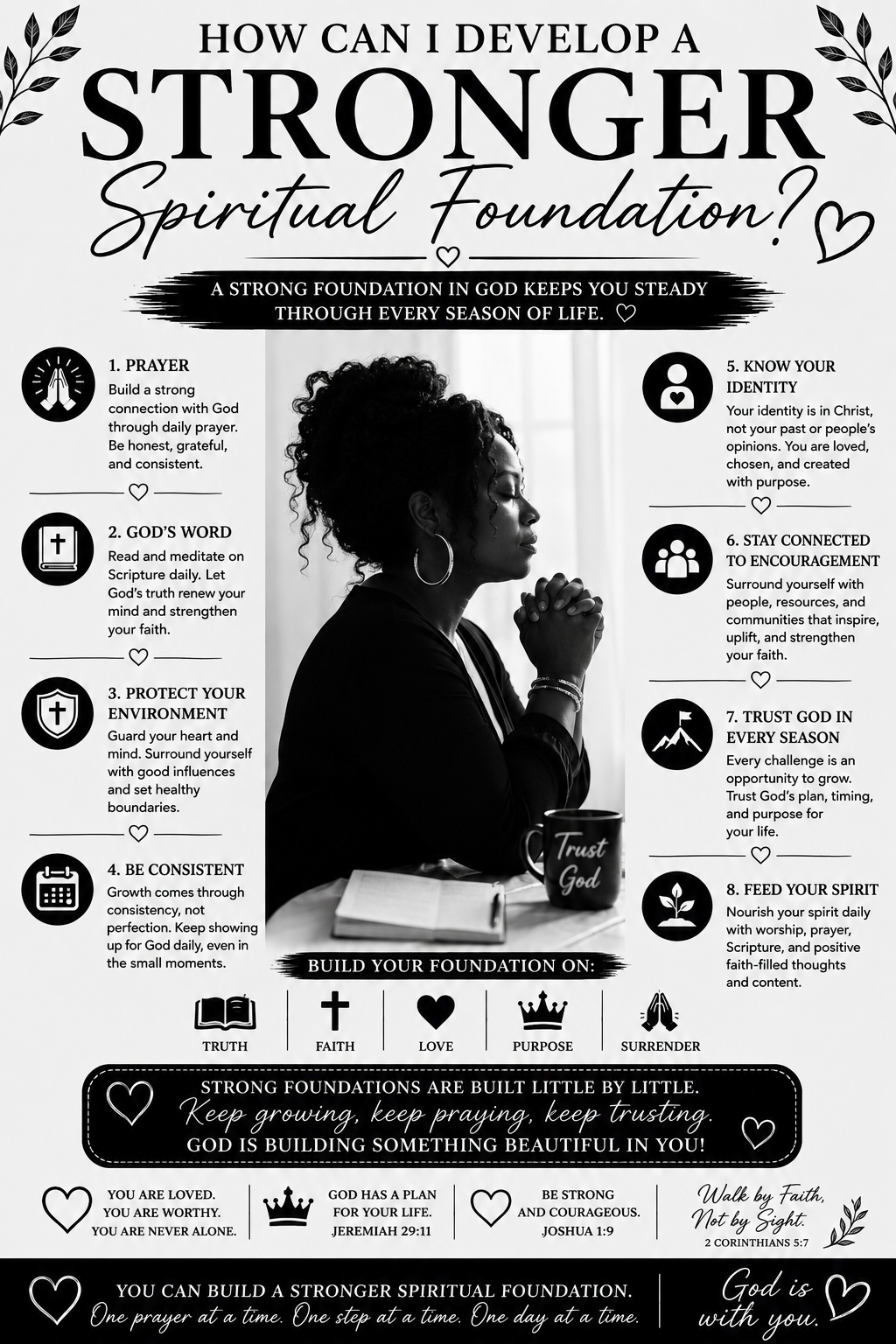
How Can I Develop a Stronger Spiritual Foundation?
A strong spiritual foundation helps people remain grounded, peaceful, and connected to God even during stressful or uncertain seasons of life. How Can I Develop a Stronger Spiritual Foundation? explores practical ways to strengthen faith through prayer, scripture, consistency, spiritual encouragement, emotional healing, and daily connection with God. This uplifting blog reminds readers that spiritual strength is built gradually through small, consistent steps toward growth and deeper faith.
How Can I Develop a Stronger Spiritual Foundation?
Life can sometimes feel overwhelming, uncertain, emotionally draining, and spiritually distracting. Many people desire peace, clarity, confidence, and a closer relationship with God — but still feel spiritually unstable during difficult seasons.
One of the biggest reasons people struggle emotionally and spiritually is because their spiritual foundation has not been strengthened consistently.
Just like a house needs a strong foundation to survive storms, people also need strong spiritual foundations to remain steady during:
Stress
Fear
Disappointment
Financial pressure
Emotional struggles
Relationship problems
Spiritual warfare
Uncertainty about the future
A strong spiritual foundation helps people stay grounded, focused, peaceful, and connected to God even when life becomes difficult.
1. Build Your Foundation Through Prayer
Prayer is one of the most important parts of spiritual growth.
Prayer is not only about asking God for things.
It is about building relationship, trust, intimacy, and connection with Him.
A stronger prayer life helps:
Calm anxiety
Increase spiritual awareness
Bring peace during stressful seasons
Strengthen faith
Provide guidance and clarity
Help release emotional burdens
You do not need perfect words to pray.
God simply wants honesty and consistency.
Ways to Strengthen Your Prayer Life
Pray daily, even briefly
Create quiet moments with God
Write prayers in a journal
Pray honestly about your emotions
Practice gratitude during prayer
Prayer journals and faith-centered reflection tools can help create consistency and spiritual focus throughout the week.
2. Read and Meditate on Scripture
Your spiritual foundation becomes stronger when your mind is filled with truth instead of constant fear, negativity, confusion, or emotional instability.
Scripture helps:
Renew the mind
Build wisdom
Strengthen faith
Provide comfort
Increase discernment
Encourage healing
Even reading a few verses consistently each day can begin transforming your mindset over time.
Helpful Ways to Stay Consistent
Start with Psalms or Proverbs
Highlight encouraging scriptures
Keep scripture reminders nearby
Journal reflections after reading
Listen to audio scripture while driving or relaxing
Faith-based books and spiritual encouragement resources can also help reinforce biblical principles daily.
3. Protect Your Spiritual Environment
Your environment affects your spiritual health more than many people realize.
Constant negativity, toxic relationships, unhealthy influences, and emotional chaos can slowly weaken spiritual peace and focus.
A stronger spiritual foundation often requires protecting your peace intentionally.
This May Include:
Setting healthy boundaries
Limiting toxic conversations
Reducing negative influences
Listening to uplifting worship or teachings
Creating peaceful spaces for prayer and reflection
Even small changes in your environment can help strengthen your emotional and spiritual stability.
4. Develop Consistency, Not Perfection
Many people become discouraged because they expect instant spiritual transformation.
But strong spiritual foundations are built gradually through consistency.
Spiritual growth is not about being perfect every day.
It is about continuing to grow, learn, and seek God consistently.
Consistency May Look Like:
Daily prayer
Worship during difficult seasons
Reading scripture regularly
Spending quiet time with God
Journaling thoughts and prayers
Staying connected to encouraging faith-centered environments
Small daily habits eventually create strong spiritual stability.
5. Strengthen Your Identity in God
Many people struggle spiritually because they do not truly understand their worth, purpose, or identity.
Without strong identity, people become easily affected by:
Rejection
Comparison
Fear
Insecurity
Opinions of others
Emotional instability
A strong spiritual foundation includes understanding that your identity comes from God — not from failures, past mistakes, or outside validation.
Faith-centered encouragement tools like:
Unshakeable Confidence
God Says I Am Special
Prayer journals
Identity affirmations
Inspirational apparel and reminders
Can help reinforce truth, confidence, and emotional healing daily.
6. Stay Connected to Encouragement
Spiritual growth becomes harder when people isolate themselves emotionally and spiritually.
Encouragement matters.
Sometimes people simply need:
Prayer support
Accountability
Spiritual conversations
Guidance
Encouraging reminders
Safe faith-centered environments
Spiritual coaching, faith communities, and growth-centered spaces like the Personal Prophecy Secret Room can help people remain spiritually encouraged and consistent during difficult seasons.
7. Learn to Trust God During Difficult Seasons
Strong spiritual foundations are often built during hard seasons, not easy ones.
Anyone can feel spiritually strong when life feels perfect.
But deeper faith develops through:
Waiting seasons
Disappointment
Emotional healing
Uncertainty
Spiritual battles
Difficult life transitions
Trusting God through difficulty strengthens spiritual maturity and emotional resilience over time.
8. Feed Your Spirit Daily
Just like the body needs nourishment, the spirit does too.
What you consistently feed your mind and heart matters deeply.
Daily spiritual nourishment may include:
Worship music
Scripture
Encouraging books
Prayer
Positive affirmations
Journaling
Spiritual reflection
Faith-centered conversations
The more intentionally you nourish your spirit, the stronger your spiritual foundation becomes.
9. Remember That Growth Takes Time
A strong spiritual foundation is not built overnight.
Growth happens gradually through:
Prayer
Healing
Learning
Surrender
Reflection
Discipline
Trusting God daily
Some seasons may feel slow.
Others may feel transformational.
But every step matters.
Encouragement
Developing a stronger spiritual foundation means creating a life that remains connected to God even during difficult seasons.
It means strengthening your faith through prayer, scripture, consistency, healing, spiritual discipline, and daily encouragement.
Strong foundations are built little by little.
And even if your journey feels imperfect, every prayer, every moment of growth, and every step toward God is helping build spiritual strength within you.
You do not have to become perfect overnight.
You simply have to continue growing.
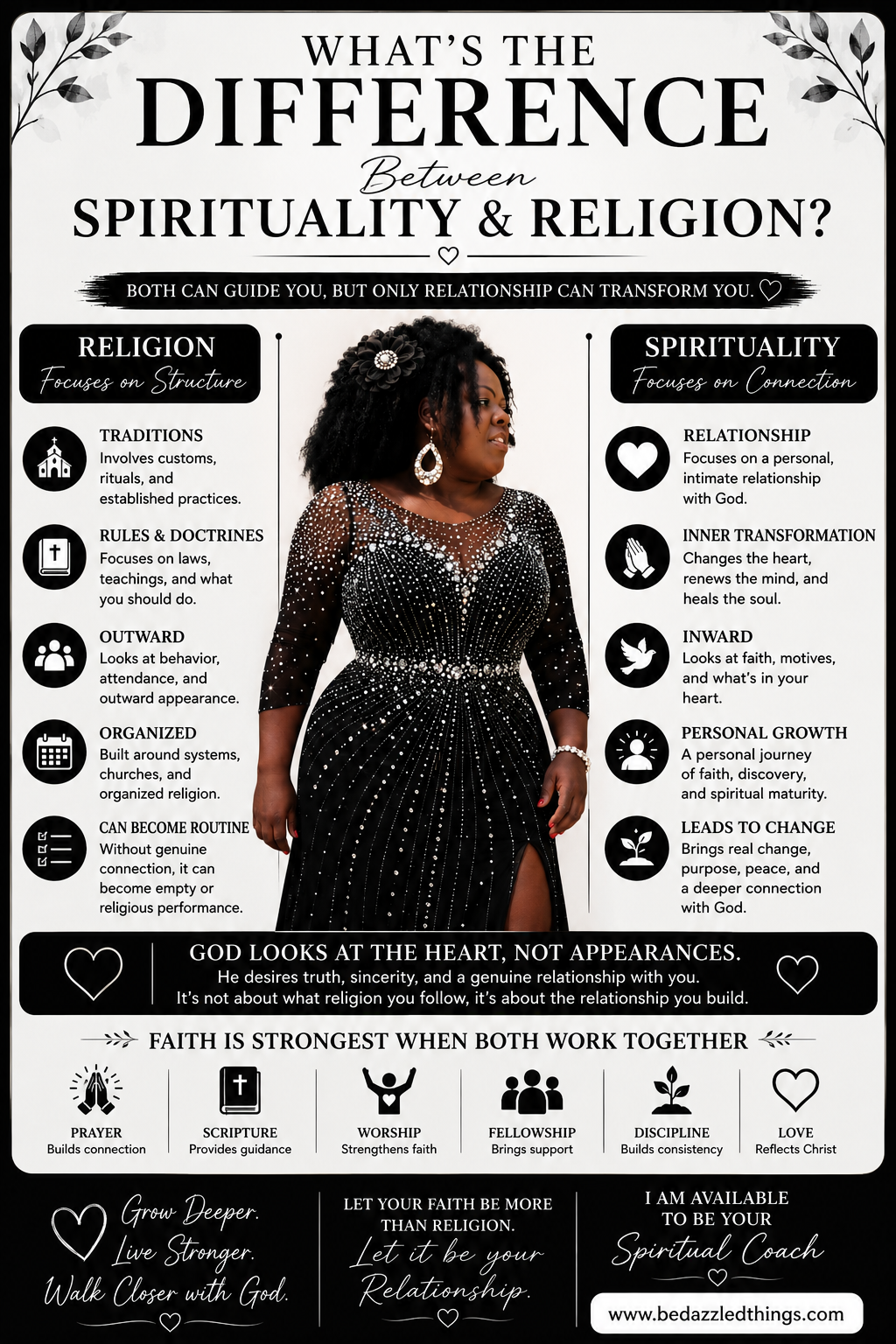
What’s the Difference Between Spirituality and Religion?
Many people today wonder about the difference between spirituality and religion and how each affects their relationship with God. What’s the Difference Between Spirituality and Religion? explores how religion often provides structure and guidance, while spirituality focuses on personal connection, inner healing, faith, and transformation. This encouraging blog helps readers understand how genuine spiritual growth develops through both wisdom and relationship with God rather than outward appearance alone.
What’s the Difference Between Spirituality and Religion?
Many people today use the words spirituality and religion interchangeably, but they are not always understood in the same way.
Some people say:
“I’m spiritual but not religious.”
“I believe in God, but I struggle with religion.”
“I want a relationship with God, not just traditions.”
These conversations have become increasingly common because many people are searching for deeper meaning, healing, peace, purpose, and connection with God — not simply routines or outward appearances.
Understanding the difference between spirituality and religion can help people grow in faith more intentionally and avoid confusion in their spiritual journey.
1. Religion Focuses on Structure
Religion often involves:
Traditions
Practices
Teachings
Rules
Worship gatherings
Organized belief systems
Shared doctrines and values
Religion can provide:
Community
Guidance
Accountability
Biblical teaching
Spiritual discipline
Opportunities for worship and service
Healthy religious structure can help people develop consistency and spiritual foundations.
However, religion without genuine connection can sometimes become routine, performative, or emotionally disconnected.
2. Spirituality Focuses on Connection
Spirituality is often centered around:
Personal connection with God
Inner transformation
Prayer
Reflection
Faith
Spiritual growth
Emotional healing
Purpose and identity
Spirituality focuses on developing intimacy with God, not just outward appearance.
It involves:
Growing internally
Renewing the mind
Strengthening faith
Becoming more aligned spiritually
Developing peace and wisdom
True spirituality changes the heart, not just behavior.
3. You Can Have Religion Without Relationship
One reason many people struggle spiritually is because they may participate in religious activities while still feeling emotionally distant from God.
Someone can:
Attend church regularly
Know scripture intellectually
Follow traditions
Participate outwardly
Yet still feel:
Empty
Spiritually disconnected
Emotionally wounded
Unchanged internally
This is why relationship with God matters deeply.
God desires genuine connection, not only outward performance.
4. Spirituality Without Wisdom Can Become Misleading
At the same time, spirituality without biblical wisdom or healthy guidance can sometimes become confusing.
Not every spiritual idea reflects truth or healthy spiritual growth.
That is why balance matters.
Healthy spirituality should include:
Wisdom
Discernment
Truth
Prayer
Integrity
Growth in character
Alignment with godly principles
Spirituality should lead people closer to God, healing, love, wisdom, and purpose — not confusion or emotional instability.
5. Faith Is Meant to Transform Daily Life
Both healthy spirituality and healthy religious structure should ultimately help people:
Grow closer to God
Develop stronger faith
Heal emotionally
Build godly character
Walk in peace and purpose
Treat others with love and compassion
Faith is not meant to exist only during church services or emotional moments.
It should influence:
Relationships
Decision-making
Identity
Emotional health
Character
Daily living
6. God Cares About the Heart
One of the biggest themes throughout Scripture is that God looks beyond outward appearance and focuses on the heart.
This means spirituality is not about pretending to appear perfect externally while struggling internally without healing or growth.
God desires:
Honesty
Sincerity
Growth
Healing
Faith
Relationship
Transformation
Real spiritual growth happens internally first.
7. Religion and Spirituality Can Work Together
Religion and spirituality do not always have to oppose one another.
Healthy faith often includes both:
Spiritual connection with God
Healthy spiritual structure and guidance
For example:
Prayer builds connection
Scripture provides guidance
Worship strengthens faith
Fellowship provides encouragement
Spiritual disciplines build consistency
The healthiest spiritual lives often combine:
Relationship with God
Biblical wisdom
Spiritual growth
Accountability
Genuine transformation
8. Spiritual Growth Is About More Than Appearance
Many people have been hurt by experiences where faith focused more on appearance than healing.
But true spiritual growth involves:
Emotional healing
Renewing the mind
Developing peace
Learning forgiveness
Growing in wisdom
Strengthening identity in God
Becoming emotionally and spiritually healthier
Faith should help people grow internally, not simply look spiritual externally.
9. Spiritual Support Can Help Strengthen Growth
Many people today seek spiritual encouragement through:
Prayer journals
Faith-centered coaching
Devotionals
Spiritual growth communities
Encouraging books
Prophetic encouragement
Worship and reflection resources
At BeDazzled & Things, products and services like:
Spiritual coaching
The Personal Prophecy Secret Room
Unshakeable Confidence
Prayer journals
Faith-based encouragement resources
Were created to help people strengthen their faith, heal emotionally, grow spiritually, and deepen their relationship with God in practical everyday life.
Encouragement
The difference between spirituality and religion ultimately comes down to more than labels.
Religion often provides structure.
Spirituality focuses on relationship and transformation.
But healthy faith grows strongest when wisdom, truth, spiritual connection, and genuine relationship with God work together.
God does not simply desire outward performance.
He desires your heart.
And true spiritual growth happens when faith becomes more than routine — it becomes a living relationship that transforms your life from the inside out.

How Do I Know If a Spiritual Coach Is Right for Me?
Many people wonder whether spiritual coaching could help them grow closer to God, gain clarity, heal emotionally, or strengthen their faith during difficult seasons of life. How Do I Know If a Spiritual Coach Is Right for Me? explores the signs that spiritual support, encouragement, accountability, and faith-centered guidance may help individuals navigate spiritual growth, emotional healing, purpose, and deeper connection with God more confidently and consistently.
How Do I Know If a Spiritual Coach Is Right for Me?
There are seasons in life when people feel spiritually stuck, emotionally overwhelmed, uncertain about their purpose, or disconnected from the peace and clarity they desire.
Some people quietly struggle with:
Fear about the future
Spiritual confusion
Emotional exhaustion
Lack of direction
Difficulty hearing God clearly
Healing from painful experiences
Feeling spiritually alone
Wanting deeper growth but not knowing where to begin
During these seasons, many begin searching for guidance, encouragement, accountability, and spiritual support.
This is often where spiritual coaching can become helpful.
But many people still wonder:
“How do I know if a spiritual coach is right for me?”
The answer depends on what kind of support, growth, and spiritual guidance you are seeking during your current season of life.
1. You Desire Deeper Spiritual Growth
One sign that spiritual coaching may benefit you is when you genuinely desire a deeper relationship with God but feel unsure how to grow consistently.
You may want help with:
Building stronger prayer habits
Developing spiritual discipline
Understanding your purpose
Growing emotionally and spiritually
Strengthening your faith
Learning how to hear God more clearly
Overcoming spiritual stagnation
Sometimes people simply need encouragement, structure, and support while navigating their faith journey.
2. You Feel Spiritually Stuck or Confused
Many people experience seasons where they feel:
Spiritually drained
Confused about life decisions
Emotionally overwhelmed
Unsure about their direction
Disconnected from God
Mentally exhausted
A spiritual coach can help provide:
Encouragement
Accountability
Prayer support
Perspective
Faith-centered guidance
Spiritual reflection tools
Sometimes clarity becomes easier when someone helps you process what you are experiencing spiritually.
3. You Want Faith-Centered Encouragement
The world offers endless advice, but many people specifically desire guidance rooted in faith and spiritual principles.
A spiritual coach focuses on helping people:
Strengthen their relationship with God
Develop healthier spiritual habits
Heal emotionally
Build confidence
Grow in wisdom
Stay spiritually grounded
Faith-centered coaching often combines:
Prayer
Encouragement
Reflection
Spiritual growth strategies
Accountability
Emotional support
For many people, having spiritually aligned encouragement can make a major difference during difficult seasons.
4. You Need Accountability in Your Spiritual Journey
Growth is often easier with accountability.
Many people start strong spiritually but struggle with:
Consistency
Motivation
Discipline
Following through
Maintaining spiritual focus
A spiritual coach can help encourage consistency through:
Goal-setting
Reflection
Prayer support
Encouragement
Growth conversations
Faith-centered planning
Sometimes people grow more confidently when they feel supported instead of isolated.
5. You Are Healing From Emotional or Spiritual Pain
Some people seek spiritual coaching during seasons of:
Rejection
Heartbreak
Anxiety
Fear
Low self-esteem
Bullying
Identity struggles
Emotional wounds
Healing through faith often requires:
Safe conversations
Encouragement
Spiritual reminders
Renewing the mind
Learning healthy boundaries
Rebuilding confidence spiritually
Spiritual coaching can help support healing while encouraging people to remain connected to God throughout the process.
6. The Right Spiritual Coach Should Point You Toward God — Not Dependence
A healthy spiritual coach should encourage your personal relationship with God, not create unhealthy dependence on themselves.
The purpose of spiritual coaching is to:
Encourage growth
Strengthen faith
Help you seek God more deeply
Support emotional and spiritual healing
Build confidence and clarity
A strong spiritual coach should inspire wisdom, healing, and spiritual maturity — not control.
7. Peace Matters When Choosing a Spiritual Coach
When considering spiritual coaching, pay attention to:
Peace
Wisdom
Integrity
Alignment with your values
Healthy communication
Genuine encouragement
Spiritual maturity
The right coach should make you feel:
Encouraged
Supported
Spiritually uplifted
Heard
Motivated toward growth
Not pressured, fearful, or emotionally manipulated.
8. Spiritual Coaching Is About Growth, Not Perfection
Some people hesitate to seek spiritual support because they feel:
“I should already have it together.”
“I’m struggling too much.”
“My faith isn’t strong enough.”
But spiritual coaching is not for perfect people.
It is for people who genuinely desire:
Growth
Healing
Direction
Encouragement
Stronger faith
Spiritual clarity
Everyone grows at different paces.
The important thing is continuing the journey.
9. Faith-Centered Resources Can Also Support Growth
Spiritual growth often continues outside coaching sessions as well.
Faith-centered resources like:
Prayer journals
Devotionals
Encouraging books
Scripture reminders
Worship resources
Faith-based apparel and affirmations
Can help reinforce spiritual growth daily.
Resources like:
Unshakeable Confidence
God Says I Am Special
BeDazzled Survival Guide for Teens
Prayer journals and prophetic encouragement tools
Were created to encourage healing, confidence, identity, and spiritual strengthening throughout everyday life.
Encouragement
If you are feeling spiritually stuck, emotionally overwhelmed, uncertain about your purpose, or simply desiring deeper connection with God, spiritual coaching may provide the encouragement and support you need during this season of your life.
The right spiritual coach should help:
Strengthen your faith
Encourage your healing
Support your growth
Help you remain spiritually grounded
Point you closer toward God
Growth takes time.
Healing takes time.
Clarity often develops gradually.
But you do not have to navigate your spiritual journey alone.
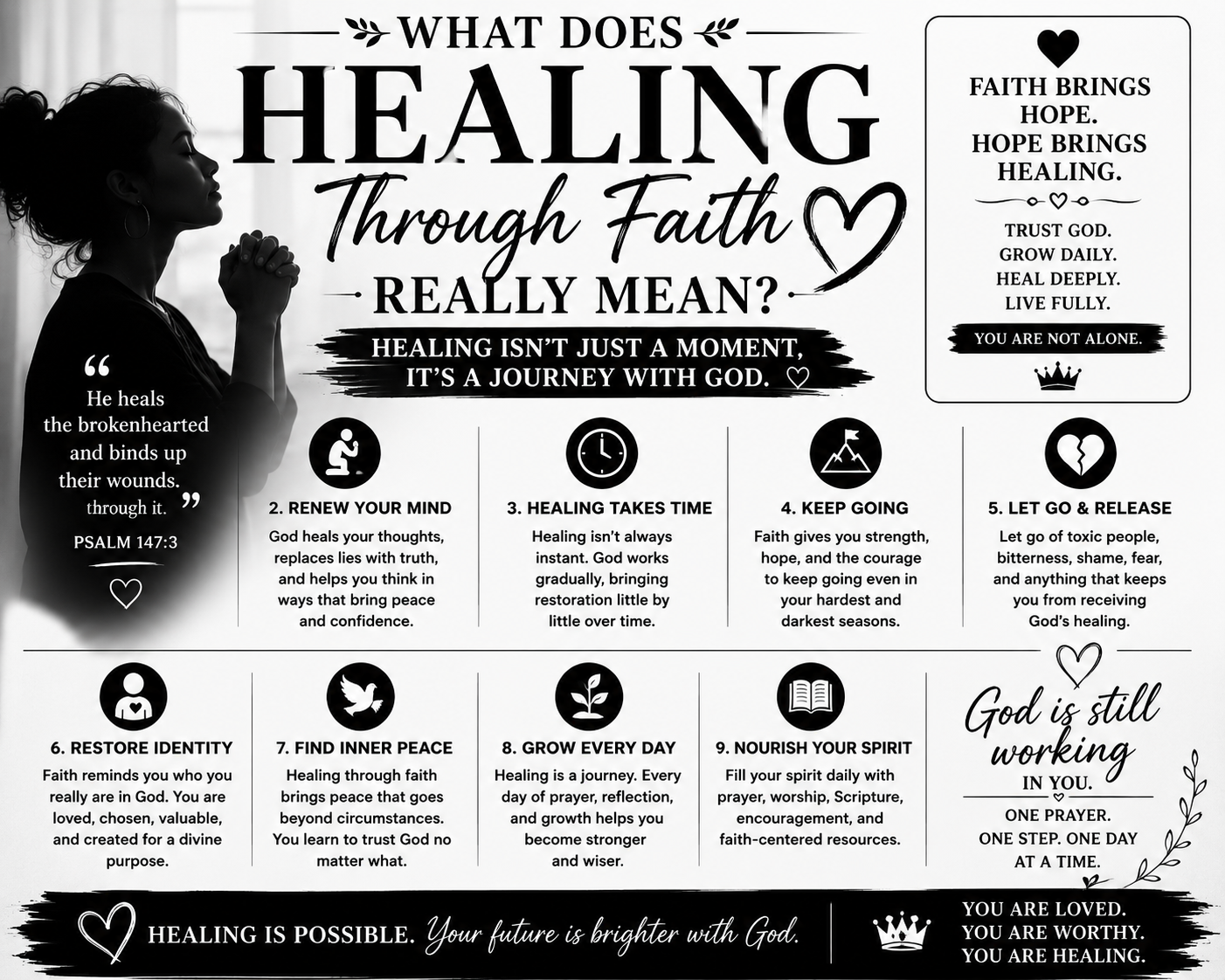
What Does Healing Through Faith Really Mean?
Healing through faith is more than emotional recovery — it is the process of allowing God to restore peace, strength, identity, and hope within every broken area of life. What Does Healing Through Faith Really Mean? explores how prayer, spiritual growth, renewed thinking, emotional healing, and faith-centered encouragement can help people overcome pain, rejection, fear, and insecurity while growing stronger spiritually and emotionally through God’s guidance.
What Does Healing Through Faith Really Mean?
Healing through faith is something many people hear about, but not everyone fully understands.
Some people think healing only refers to physical miracles.
Others believe it means pretending pain no longer exists.
And some quietly wonder why healing seems easier for other people than it feels for them.
But true healing through faith is often much deeper than people realize.
Healing through faith means allowing God to work within every broken area of your life — emotionally, spiritually, mentally, and sometimes physically — bringing restoration, peace, strength, wisdom, and transformation over time.
Healing is not always instant.
Sometimes it is a process.
Sometimes it happens quietly.
Sometimes it happens little by little while God rebuilds your heart from the inside out.
1. Healing Through Faith Begins With Surrender
Many people try to carry emotional pain alone.
They hide:
Trauma
Rejection
Fear
Anxiety
Shame
Heartbreak
Disappointment
Emotional exhaustion
But healing often begins when people stop pretending they are okay and honestly bring their pain before God.
Faith does not mean denying pain exists.
It means trusting God enough to let Him help you through it.
2. Faith Helps Renew the Mind
One of the deepest areas God heals is the mind.
Many emotional struggles are connected to:
Negative thinking
Fear
Insecurity
Self-hatred
Comparison
Bitterness
Hopelessness
Healing through faith involves renewing your thoughts with truth instead of constantly feeding fear and negativity.
That is why surrounding yourself with:
Scripture
Prayer
Worship
Encouragement
Faith-centered books
Positive reminders
Can become so important during healing seasons.
Books like Unshakeable Confidence, God Says I Am Special, and BeDazzled Prayers Against Bullying were created to help encourage healing, identity, peace, and emotional strength through faith.
3. Healing Does Not Always Mean the Pain Disappears Immediately
One of the biggest misconceptions about healing is believing that faith means pain instantly disappears.
Sometimes God heals instantly.
Other times healing happens gradually through:
Time
Prayer
Growth
Wisdom
Reflection
Emotional processing
Spiritual maturity
Healing may look like:
Responding differently
Finding peace again
Learning to trust again
Regaining confidence
Letting go of bitterness
Becoming emotionally stronger
Progress is still healing.
4. Faith Helps People Keep Going During Difficult Seasons
Some seasons of life feel emotionally heavy.
People may struggle with:
Grief
Loneliness
Bullying
Rejection
Financial pressure
Anxiety
Depression
Family struggles
Healing through faith does not mean life suddenly becomes easy.
It means God gives strength, peace, and hope while walking through difficult seasons.
Sometimes faith becomes the reason people do not give up.
5. Healing Often Requires Letting Go
Part of healing involves releasing things that continue causing emotional harm.
That may include:
Toxic relationships
Negative environments
Shame from the past
Fear
Unforgiveness
Harmful mindsets
Constant comparison
Healing sometimes requires creating healthier spiritual and emotional boundaries.
God often heals people while teaching them how to protect their peace.
6. Faith Restores Identity
Many painful experiences damage self-worth.
People begin believing lies like:
“I’m broken.”
“I’m unworthy.”
“I’ll never heal.”
“Nobody cares.”
“I’ll never be enough.”
Healing through faith reminds people that their identity is not defined by pain.
God still sees them as:
Loved
Valuable
Chosen
Purposeful
Worthy of grace
Capable of healing and growth
True healing often begins when people stop identifying themselves by their wounds alone.
7. Healing Through Faith Brings Inner Peace
One powerful result of healing through faith is peace.
Not perfect circumstances.
Not a problem-free life.
But inner peace.
The kind of peace that says:
“I trust God.”
“I’m healing.”
“I’m growing.”
“My past does not control me.”
“God is still working in my life.”
Faith helps anchor people emotionally even during uncertain seasons.
8. Healing Is a Journey, Not a Competition
Many people compare their healing process to others.
But healing looks different for everyone.
Some people heal quickly in certain areas.
Others heal slowly over time.
There is no perfect timeline for emotional or spiritual healing.
The important thing is continuing the journey with God instead of giving up.
9. Healing Also Requires Daily Nourishment
Just like the body needs nourishment, the spirit does too.
Daily encouragement matters.
Simple things can help support healing:
Prayer journals
Worship music
Scripture reminders
Faith-centered books
Positive affirmations
Quiet reflection
Encouraging environments
Even small moments of encouragement can strengthen someone emotionally and spiritually during difficult seasons.
Encouragement
Healing through faith means trusting God to restore what pain, fear, rejection, heartbreak, trauma, or disappointment tried to damage within you.
It means allowing God to renew your mind, strengthen your heart, rebuild your confidence, and guide you toward peace and wholeness over time.
Healing is not weakness.
Healing is courage.
And even if your healing journey feels slow, God is still working within you.
One prayer.
One step.
One day at a time.
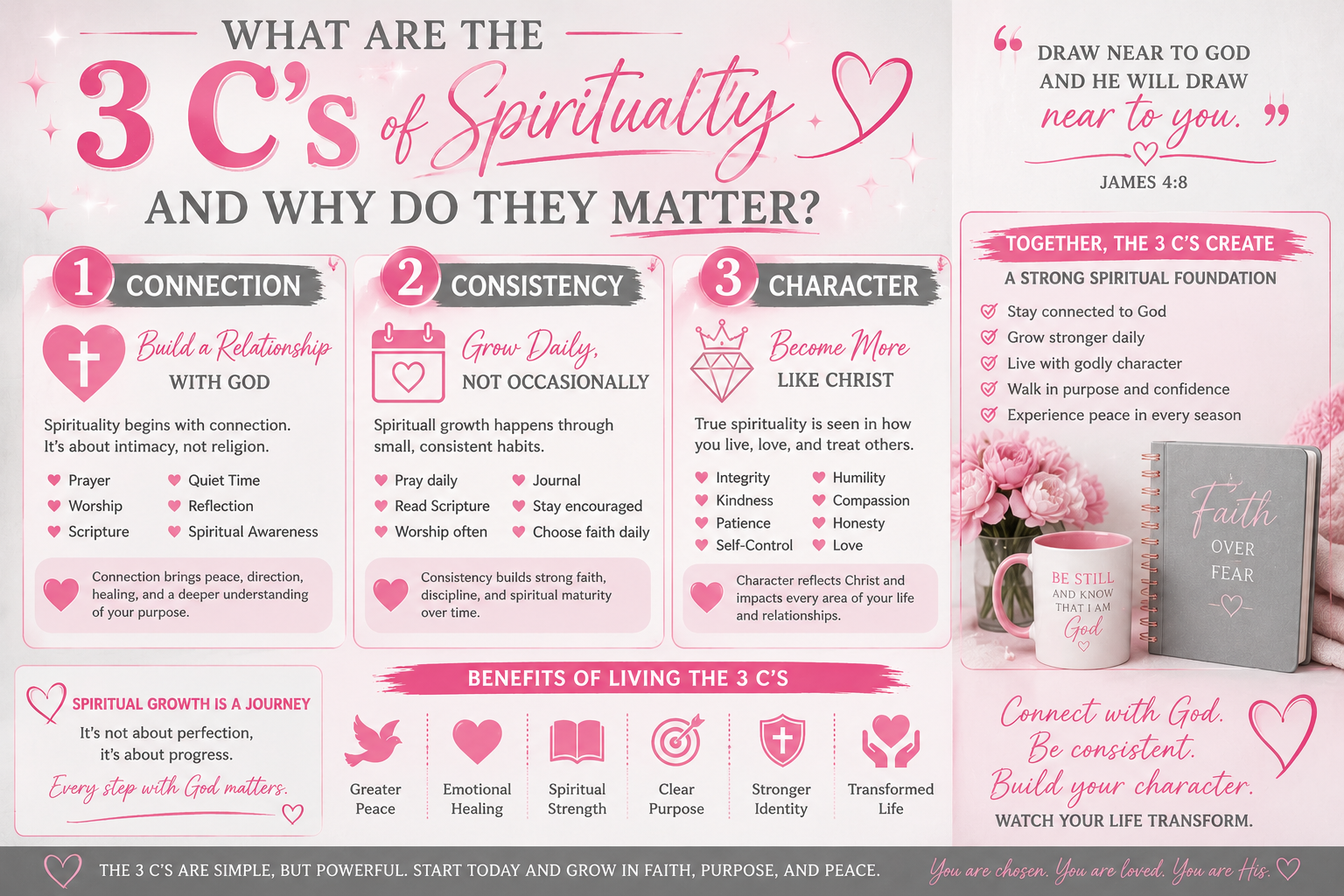
What Are the 3 C’s of Spirituality and Why Do They Matter?
The 3 C’s of spirituality — Connection, Consistency, and Character — are powerful foundations for building a stronger relationship with God and growing spiritually in everyday life. What Are the 3 C’s of Spirituality and Why Do They Matter? explores how staying connected to God, developing consistent spiritual habits, and strengthening godly character can lead to greater peace, healing, purpose, and emotional stability throughout every season of life.
What Are the 3 C’s of Spirituality and Why Do They Matter?
Spiritual growth is not just about emotional moments or occasional inspiration. It is about developing a deeper connection with God, building spiritual strength, and learning how to live with greater peace, purpose, and wisdom every day.
Many people desire a stronger spiritual life but feel overwhelmed trying to figure out where to begin.
That is why understanding the “3 C’s of Spirituality” can be so powerful.
The 3 C’s — Connection, Consistency, and Character — create a strong spiritual foundation that helps people grow emotionally, mentally, and spiritually through every season of life.
These three areas work together to strengthen faith, build confidence, and help people remain spiritually grounded even during difficult times.
1. Connection — Building a Relationship With God
The first and most important “C” is Connection.
Spirituality is not simply about religion or routines.
It is about relationship.
Connection with God happens through:
Prayer
Worship
Scripture
Quiet time with God
Reflection
Spiritual awareness
Without connection, spiritual life can begin feeling empty, distant, or emotionally dry.
Many people are busy physically but disconnected spiritually.
Why Connection Matters
Connection with God helps people:
Find peace during chaos
Receive wisdom and direction
Feel emotionally strengthened
Develop spiritual confidence
Heal emotionally
Understand their identity and purpose
When people stay connected to God consistently, they often experience greater clarity, peace, and emotional stability.
How to Strengthen Connection
You can strengthen your spiritual connection through:
Daily prayer
Reading Scripture
Journaling
Worship music
Spending quiet time with God
Creating peaceful spiritual routines
Products like prayer journals, devotionals, scripture décor, and faith-based books can help support consistent spiritual connection daily.
At BeDazzled & Things, resources like:
Unshakeable Confidence
Prayer journals
Inspirational tumblers
Faith-centered apparel
God Says I Am Special
Were created to encourage people to remain spiritually connected and encouraged throughout everyday life.
2. Consistency — Growing Daily, Not Occasionally
The second “C” is Consistency.
One of the biggest challenges many people face spiritually is inconsistency.
People often feel spiritually strong during emotional moments, church services, or difficult seasons — but struggle maintaining spiritual habits daily.
Real spiritual growth happens through consistency.
Why Consistency Matters
Consistency helps:
Build stronger faith
Renew the mind
Strengthen discipline
Increase spiritual maturity
Create peace and stability
Develop trust in God over time
Small daily habits eventually create strong spiritual foundations.
What Consistency Looks Like
Consistency does not require perfection.
It can simply mean:
Praying daily
Reading one scripture each day
Listening to worship music
Writing reflections in a journal
Reading encouraging faith-centered content
Choosing faith over fear repeatedly
Growth often happens quietly through repeated small steps.
Supporting Consistency Spiritually
Faith-centered products can help people stay encouraged and focused consistently.
Simple reminders matter:
A scripture tumbler at work
A prayer journal beside your bed
Inspirational shirts reminding you of your identity
Encouraging books for difficult seasons
These small tools can help keep faith present throughout daily life.
3. Character — Becoming More Like Christ
The third “C” is Character.
True spirituality is not only about what people say publicly.
It is also about how they live privately.
Character reflects:
Integrity
Kindness
Patience
Self-control
Humility
Compassion
Honesty
Love for others
As people grow spiritually, their character begins changing.
Why Character Matters
Strong spiritual character affects:
Relationships
Emotional health
Decision-making
Leadership
Parenting
Friendships
Work environments
Personal peace
Spiritual maturity often becomes visible through behavior, not just words.
Signs of Spiritual Character Growth
Growth in character may look like:
Responding with wisdom instead of anger
Choosing peace over drama
Forgiving more easily
Becoming less controlled by fear
Developing emotional maturity
Treating others with kindness and respect
Character development is often one of the clearest signs of spiritual growth.
Why the 3 C’s Matter Together
Connection, Consistency, and Character work together.
Without connection, spirituality becomes empty.
Without consistency, growth becomes unstable.
Without character, faith lacks visible transformation.
Together, the 3 C’s help create:
Spiritual stability
Emotional healing
Inner peace
Greater wisdom
Stronger identity
Purposeful living
They help people become spiritually grounded instead of emotionally controlled by every situation around them.
Spiritual Growth Is a Journey
Many people become discouraged because they expect instant transformation.
But spiritual growth takes time.
Some seasons involve:
Healing
Waiting
Learning
Surrender
Growth through hardship
Renewing the mind
The important thing is continuing the journey.
Every prayer matters.
Every step matters.
Every moment spent seeking God matters.
Encouragement
The 3 C’s of spirituality — Connection, Consistency, and Character — matter because they help build a stronger, healthier, more stable spiritual life.
They help people stay connected to God, grow daily in faith, and become transformed internally over time.
Spirituality is not about perfection.
It is about progress, healing, growth, and becoming more aligned with God day by day.
And sometimes the smallest consistent spiritual habits can create the greatest transformation over time.

What Is the Personal Prophecy Secret Room?
The Personal Prophecy Secret Room is a faith-centered spiritual growth space designed to encourage deeper intimacy with God through prayer, prophetic encouragement, spiritual insight, healing, and ongoing faith support. Created for those seeking peace, clarity, purpose, and spiritual strengthening, this private membership experience provides written prayers, audio encouragement, prophetic messages, live spiritual discussions, and faith-building resources to help members stay spiritually grounded and connected to God through every season of life.
What Is the Personal Prophecy Secret Room?
In a world filled with noise, pressure, confusion, and spiritual exhaustion, many people are searching for more than motivation — they are searching for clarity, peace, direction, healing, and deeper connection with God.
The Personal Prophecy Secret Room was created as a private faith-centered space for spiritual encouragement, prophetic insight, prayer, personal growth, and deeper intimacy with God.
This is more than a membership.
It is a spiritual environment designed to help strengthen your faith, encourage your purpose, and support you through life’s challenges spiritually and emotionally.
A Safe Space for Spiritual Growth
Many people silently struggle with:
Fear
Confusion
Spiritual warfare
Emotional heaviness
Feeling disconnected from God
Lack of direction
Anxiety about the future
Feeling spiritually drained
The Personal Prophecy Secret Room was created to provide a peaceful, encouraging atmosphere where members can receive spiritual support, prayer, prophetic encouragement, and faith-building resources consistently.
What Makes the Personal Prophecy Secret Room Different?
The Personal Prophecy Secret Room focuses on helping people:
Grow spiritually
Build stronger faith
Receive encouragement
Strengthen prayer lives
Gain spiritual insight
Develop confidence in God
Stay spiritually focused during difficult seasons
This space was designed for people who desire deeper spiritual connection and ongoing encouragement in their walk with God.
What Members Receive
Inside the Personal Prophecy Secret Room, members may receive access to:
Written specialized prayers
Audio prayers
Written prophetic encouragement
Faith-building messages
Spiritual growth content
Prophetic news and encouragement
Live calls and spiritual discussions
End-of-year prophetic insight
Encouraging resources for healing and purpose
Each resource is designed to help members feel spiritually supported, encouraged, and strengthened in their faith journey.
Why the “Secret Room”?
The concept of the “Secret Room” represents intimacy with God.
Throughout Scripture, private time with God was often where:
Healing happened
Direction was given
Wisdom was revealed
Strength was renewed
Faith deepened
The Secret Room symbolizes creating intentional space away from distraction to seek God more deeply.
It is about:
Prayer
Reflection
Spiritual growth
Quiet intimacy with God
Personal transformation
The Importance of Spiritual Encouragement
Many people try to carry emotional and spiritual burdens alone.
But encouragement matters deeply.
Sometimes people simply need:
Someone praying for them
A reminder that God has not forgotten them
Spiritual guidance during difficult seasons
Encouragement while waiting on God
Faith-filled support during emotional battles
The Personal Prophecy Secret Room was created to help provide that consistent spiritual encouragement.
A Community Focused on Faith & Growth
Spiritual growth often becomes easier when people are surrounded by:
Encouragement
Accountability
Prayer
Positive spiritual environments
Faith-filled conversations
Healing-centered support
The Personal Prophecy Secret Room creates a space centered around faith, growth, purpose, healing, and spiritual strengthening.
Designed for Real-Life Struggles
This space was not created for perfect people.
It was created for real people navigating:
Stress
Waiting seasons
Spiritual battles
Emotional healing
Identity struggles
Fear about the future
Desire for deeper faith
The goal is not perfection.
The goal is spiritual growth and connection with God.
Spiritual Growth Requires Consistency
One of the biggest challenges many people face spiritually is inconsistency.
Life becomes busy.
Stress increases.
Distractions multiply.
Having ongoing access to:
Prayer resources
Encouragement
Spiritual reminders
Faith-centered teachings
Supportive spiritual environments
Can help people remain spiritually grounded consistently.
Encouragement
The Personal Prophecy Secret Room is ultimately about creating intentional space for spiritual growth, prayer, encouragement, healing, and deeper connection with God.
It is a place designed to help strengthen faith, renew hope, encourage purpose, and remind people that they are not alone in their spiritual journey.
Sometimes one prayer…
One word of encouragement…
One moment in God’s presence…
Can shift someone’s entire perspective.
And in difficult seasons, having a spiritually supportive environment can make all the difference.

The Hidden Dangers of Premarital Sex and How It Can Affect Your Finances
Many people do not realize that premarital sex can affect far more than emotions alone — it can also impact decision-making, spiritual peace, financial stability, and long-term life direction. The Hidden Dangers of Premarital Sex and How It Can Affect Your Finances explores how emotional attachment, unhealthy relationship cycles, lack of discipline, and unwise decisions can create financial and spiritual consequences, while also offering hope for healing, wisdom, restoration, and a stronger future through God’s guidance.
The Hidden Dangers of Premarital Sex and How It Can Affect Your Finances
In today’s culture, premarital sex is often treated casually, normalized, and even encouraged. Many people are taught to view it as harmless entertainment, emotional comfort, or simply a normal part of relationships.
But what many people do not realize is that sexual choices can deeply affect not only emotions and spiritual health — but also finances, future stability, peace of mind, and long-term life direction.
God’s instructions about purity were never meant to control people unfairly.
They were designed to protect hearts, minds, futures, relationships, and even financial well-being.
1. Emotional Decisions Often Lead to Financial Consequences
Sex creates emotional attachment.
When intimacy happens outside of healthy commitment and spiritual wisdom, people may begin making emotional decisions instead of wise decisions.
This can lead to:
Financial dependency
Rushed living arrangements
Toxic relationship cycles
Supporting unhealthy partners financially
Poor financial judgment due to emotional attachment
Many people remain financially stuck because emotional connections keep them tied to unhealthy situations longer than they should be.
2. Premature Relationships Can Delay Purpose
Sometimes people become deeply distracted by unhealthy relationships before they are spiritually or emotionally prepared.
This can affect:
Career focus
Educational goals
Business growth
Financial discipline
Long-term planning
Instead of building stability, some individuals spend years recovering emotionally, financially, or mentally from destructive relationship patterns.
God often calls people to build spiritually and emotionally before becoming deeply connected romantically.
3. Unplanned Pregnancies Can Create Financial Pressure
Children are blessings, but unplanned pregnancies can create serious financial strain when people are emotionally, spiritually, or financially unprepared.
This may include:
Medical expenses
Childcare costs
Housing pressure
Legal responsibilities
Emotional stress
Interrupted education or career goals
Many people underestimate how deeply financial stress can affect emotional peace and future opportunities.
Wisdom and self-control can help protect future stability.
4. Soul Ties and Emotional Bondage Can Affect Decision-Making
Many believers discuss the concept of unhealthy emotional or spiritual attachments formed through sexual relationships outside of God’s design.
These attachments can sometimes lead to:
Difficulty letting go
Returning to toxic relationships
Emotional instability
Poor judgment
Repeated cycles of unhealthy behavior
When emotions become entangled, people may ignore financial warning signs, red flags, or destructive patterns that affect their future.
5. Sexual Temptation Can Distract From Financial Discipline
Many people quietly spend large amounts of money trying to maintain unhealthy lifestyles, impress partners, or sustain emotionally unstable relationships.
This may include:
Overspending to gain attention
Financial manipulation
Constant dating expenses
Supporting irresponsible behavior
Neglecting savings and future planning
Instead of building wealth, discipline, and stability, finances become consumed by emotional instability and temporary pleasure.
6. Purity Helps Protect Peace and Clarity
One of the overlooked benefits of sexual discipline is mental and emotional clarity.
When people are not constantly entangled in emotionally unhealthy relationships, they often have:
Better focus
Greater peace
Stronger boundaries
Clearer decision-making
More self-respect
Better financial discipline
Purity is not only spiritual protection.
It is also emotional and practical wisdom.
7. God’s Design for Marriage Includes Stability
Biblical marriage was designed around:
Commitment
Responsibility
Stability
Protection
Partnership
Trust
Long-term vision
When intimacy happens within healthy covenant and commitment, people are often more likely to:
Build together wisely
Plan financially
Create stability
Protect one another emotionally
Develop long-term goals together
God’s design was always intended to bring protection, not punishment.
8. Healing and Restoration Are Still Possible
Many people carry guilt, regret, shame, or pain regarding past sexual decisions.
But it is important to understand:
God’s grace is greater than your past.
Healing, restoration, wisdom, and spiritual renewal are still possible.
No matter what mistakes someone has made:
God can restore peace
God can rebuild confidence
God can renew purpose
God can heal emotional wounds
God can teach wisdom moving forward
Your past does not disqualify you from growth, healing, or a better future.
9. Building a Strong Future Requires Discipline
A strong future often requires:
Self-control
Emotional maturity
Wisdom
Financial discipline
Spiritual discernment
Patience
Protecting your peace, body, heart, and future is not weakness.
It is wisdom.
Sometimes the strongest thing a person can do is choose discipline over temporary pleasure.
Encouragement
God’s instructions about purity are ultimately rooted in love, protection, wisdom, and purpose.
Premarital sex can affect far more than physical intimacy alone.
It can influence emotions, identity, decision-making, relationships, spiritual peace, and financial stability.
But no matter your past, God offers grace, healing, wisdom, and restoration.
You are not defined by mistakes.
You are defined by God’s ability to transform your life moving forward.
Choosing wisdom, healing, discipline, and spiritual growth today can help build a stronger emotional, spiritual, and financial future tomorrow.

What Lifestyle Products Support a Faith-Centered Life?
Faith-centered lifestyle products can do more than inspire — they can encourage healing, confidence, peace, and spiritual growth in everyday life. What Lifestyle Products Support a Faith-Centered Life? explores how products like faith-based books, prayer journals, inspirational apparel, scripture décor, and spiritual wellness tools from BeDazzled & Things can help strengthen identity, deepen faith, and create daily reminders of God’s love and purpose.
What Lifestyle Products Support a Faith-Centered Life?
Living a faith-centered life is not only about what you believe — it is also about what you consistently surround yourself with every day.
The books you read.
The words you wear.
The atmosphere you create in your home.
The encouragement you place before your eyes daily.
All of these things can help strengthen your mindset, deepen your relationship with God, and remind you of who you are spiritually during difficult seasons.
At BeDazzled & Things, many of our products were created to encourage faith, healing, confidence, peace, and spiritual growth in practical everyday life.
1. Faith-Based Books That Strengthen Identity
One of the most powerful ways to support a faith-centered lifestyle is through books that renew the mind and encourage spiritual growth.
Many people struggle with:
Insecurity
Bullying
Fear
Anxiety
Rejection
Low self-esteem
Feeling disconnected from God
That is why faith-centered reading matters.
Books like:
Unshakeable Confidence
God Says I Am Special
Destiny & the Pressure to Fit In
BeDazzled Survival Guide for Teens
BeDazzled Prayers Against Bullying
Were designed to help readers:
Build confidence
Understand their worth in God
Heal emotionally
Strengthen their faith
Learn spiritual resilience
Faith-filled books can become daily reminders of truth during hard seasons.
2. Prayer Journals & Spiritual Reflection Tools
Prayer journals are powerful because they help people slow down and connect with God intentionally.
Writing prayers, reflections, goals, and scriptures can help:
Reduce emotional overwhelm
Increase spiritual focus
Build consistency in prayer
Strengthen faith during difficult seasons
Track personal growth and answered prayers
Our journals and guided spiritual tools are designed to create moments of peace, reflection, and connection with God in everyday life.
3. Faith-Based Apparel That Speaks Life
What you wear can also become a source of encouragement and spiritual identity.
Faith-centered apparel can remind people:
Who they are in God
What they are overcoming
What they believe
What God says about them
Products like:
“God Says I’m His Favorite”
“She’s That Girl”
“I Am Chosen & Royal”
“God Made Me All That I Am”
“No Bullying”
“Created 4 More”
Were created to inspire confidence, healing, strength, and positive identity.
Sometimes a simple message on a shirt can encourage not only the person wearing it, but also someone who sees it.
4. Christian Home & Lifestyle Products
Creating a peaceful environment matters spiritually.
Faith-centered home products like:
Scripture duvet covers
Inspirational tumblers
Faith décor
Prayer room accessories
Scripture journals
Can help create an atmosphere of:
Peace
Encouragement
Reflection
Worship
Spiritual focus
Your environment influences your mindset more than many people realize.
5. Products That Encourage Children Spiritually
Children also need encouragement, confidence, and spiritual identity early in life.
That is why products designed for children can help reinforce:
Kindness
Confidence
Obedience
Faith
Self-worth
Emotional healing
Books from the Isaiah and Destiny series were created to help children navigate:
Bullying
Peer pressure
Identity struggles
Emotional pain
Confidence issues
Through faith-centered storytelling and encouragement.
6. Faith-Based Products Can Encourage Daily Consistency
Sometimes spiritual growth happens through small daily reminders.
A prayer journal on your nightstand.
A scripture tumbler at work.
A devotional before bed.
A shirt reminding you of your identity in Christ.
A children’s book teaching confidence through God’s love.
Small daily encouragements can strengthen faith over time.
7. The Goal Is Always Spiritual Growth
Faith-centered products are not meant to replace God.
They are meant to support spiritual growth and encourage people during everyday life.
The goal is always:
Healing
Faith
Encouragement
Peace
Confidence
Spiritual connection
Purpose
Every product should point people back toward hope, truth, and God’s love.
Encouragement
Living a faith-centered life is often built through intentional daily choices.
The encouragement you listen to.
The atmosphere you create.
The messages you surround yourself with.
The truth you allow into your heart consistently.
Faith-based lifestyle products can help support that journey by creating reminders of God’s love, purpose, healing, and truth throughout everyday life.
And sometimes, one encouraging message, one prayer journal, one book, or one reminder about identity in God can impact someone far more deeply than we realize.
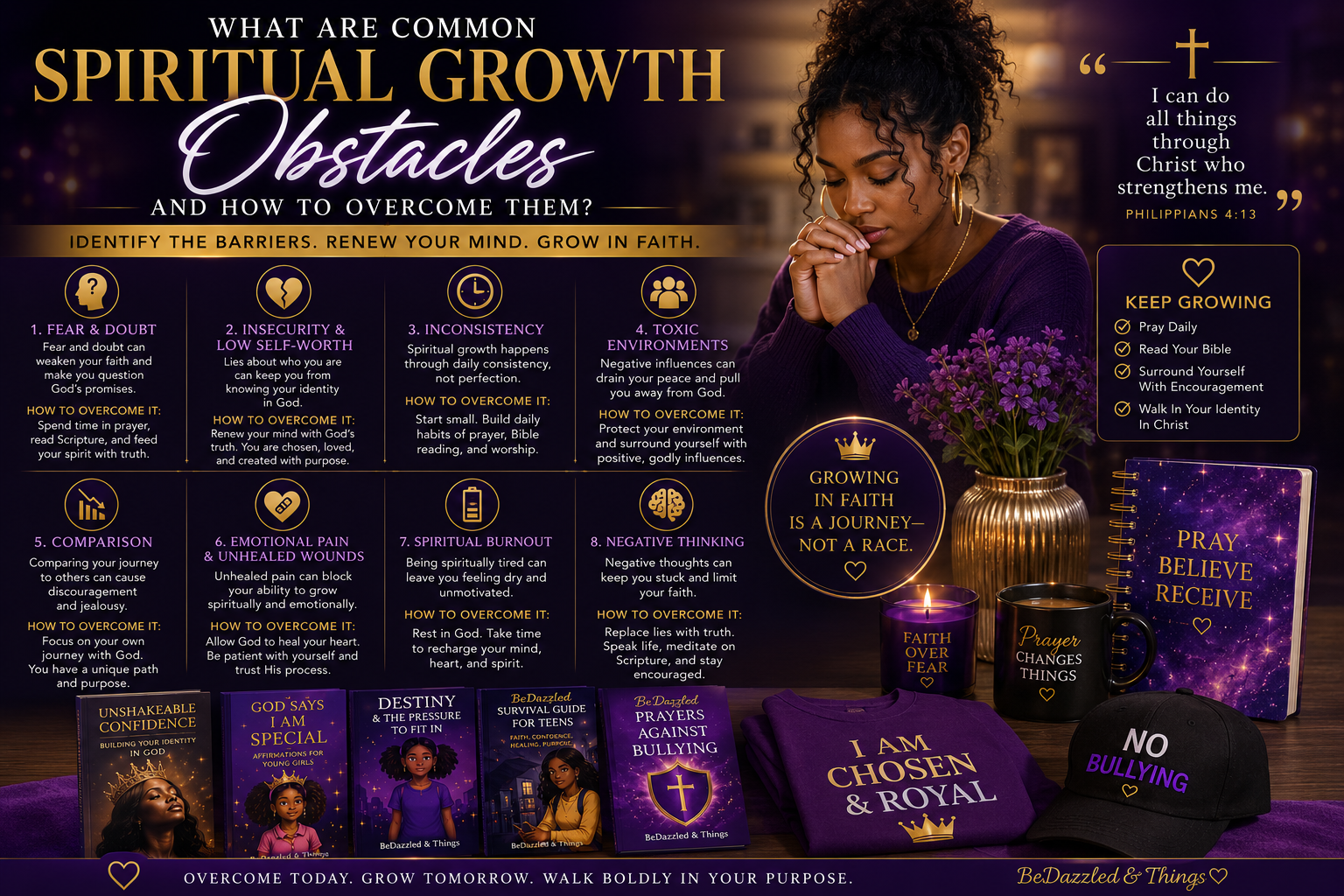
What Are Common Spiritual Growth Obstacles and How to Overcome Them?
Spiritual growth can sometimes feel difficult when fear, insecurity, comparison, emotional pain, inconsistency, or toxic environments create barriers to faith and healing. What Are Common Spiritual Growth Obstacles and How to Overcome Them? explores practical ways to identify spiritual roadblocks and overcome them through prayer, encouragement, faith-centered resources, healthy habits, and renewed identity in God. This uplifting blog reminds readers that growth is a journey, and every step toward healing and faith matters.
What Are Common Spiritual Growth Obstacles and How to Overcome Them?
Spiritual growth is one of the most rewarding journeys a person can experience, but it is not always easy.
Many people deeply desire a closer relationship with God, greater peace, stronger faith, and emotional healing — yet still feel stuck spiritually.
Sometimes growth feels slow.
Sometimes life becomes distracting.
Sometimes pain, fear, insecurity, or exhaustion create barriers that make it difficult to stay spiritually connected.
The truth is, nearly everyone experiences obstacles during their faith journey.
Struggling does not mean you are failing spiritually.
It means you are human.
The important thing is learning how to recognize spiritual obstacles and continue growing through them instead of giving up.
1. Fear and Doubt
One of the biggest obstacles to spiritual growth is fear.
Fear can sound like:
“What if God does not hear me?”
“What if I never change?”
“What if I’m not good enough?”
“What if I fail again?”
Doubt can slowly weaken confidence, consistency, and trust in God.
How to Overcome It
Spend time strengthening your faith daily through:
Prayer
Scripture
Worship
Encouraging teaching
Faith-based books and devotionals
Books like Unshakeable Confidence and God Says I Am Special were created to help renew the mind, strengthen identity, and remind readers of their worth through God’s truth instead of fear.
Faith grows when you consistently feed your spirit with encouragement and truth.
2. Insecurity and Low Self-Worth
Many people struggle spiritually because deep inside they feel:
Unworthy
Rejected
Broken
Forgotten
Not good enough
When people do not understand their identity in God, insecurity can affect every area of life.
How to Overcome It
Healing often begins by renewing your mindset.
Surround yourself with reminders of truth through:
Scripture
Prayer journals
Faith-centered affirmations
Inspirational apparel
Spiritually encouraging books
Products and resources that reinforce messages like:
“I Am Chosen & Royal”
“God Says I’m His Favorite”
“Created 4 More”
“She’s That Girl”
Can help remind people daily that their identity is rooted in God, not rejection or comparison.
3. Inconsistency
Many believers struggle with consistency.
Life becomes busy.
Stress increases.
Schedules become overwhelming.
Before long:
Prayer decreases
Bible reading becomes rare
Worship feels distant
Spiritual focus weakens
Consistency is one of the biggest keys to spiritual growth.
How to Overcome It
Start small.
You do not need to become spiritually perfect overnight.
Simple daily habits matter:
Five minutes of prayer
One chapter of Scripture
Writing in a prayer journal
Listening to worship music
Reading a devotional before bed
Spiritual growth happens gradually through daily consistency.
4. Toxic Environments
Your environment affects your spiritual health more than many people realize.
Negative environments filled with:
Constant drama
Gossip
Toxic relationships
Emotional chaos
Peer pressure
Ungodly influences
Can slowly drain spiritual peace and focus.
How to Overcome It
Protect your spiritual environment intentionally.
Create peaceful spaces through:
Worship
Scripture décor
Encouraging content
Faith-centered books
Positive conversations
Healthy spiritual boundaries
Even small changes in your environment can help strengthen your spiritual mindset daily.
5. Comparison
Comparison is one of the fastest ways to become discouraged spiritually.
Many people compare:
Their faith journey
Their healing process
Their spiritual gifts
Their life progress
Their relationship with God
To other people.
But spiritual growth is personal.
How to Overcome It
Focus on your own journey with God.
Your growth may look different from someone else’s — and that is okay.
Books like Destiny & the Pressure to Fit In and BeDazzled Survival Guide for Teens were designed to help readers overcome comparison, bullying, peer pressure, and identity struggles through faith and self-worth.
6. Emotional Pain and Unhealed Wounds
Sometimes spiritual growth becomes difficult because people are carrying emotional wounds from:
Childhood trauma
Rejection
Bullying
Abuse
Disappointment
Betrayal
Grief
Pain can make people feel spiritually disconnected or emotionally numb.
How to Overcome It
Healing takes time.
Allow yourself to:
Pray honestly
Process emotions
Seek healthy support
Spend time with God consistently
Read encouraging material
Give yourself grace during healing seasons
God often works deeply within painful seasons, even when growth feels slow.
7. Spiritual Burnout
Sometimes people become spiritually exhausted from constantly trying to appear strong while silently struggling emotionally.
Burnout can leave people feeling:
Drained
Unmotivated
Emotionally tired
Spiritually distant
How to Overcome It
Rest matters spiritually too.
Spend quiet time with God without pressure or performance.
Sometimes healing begins through:
Rest
Peace
Reflection
Worship
Simplicity
Honest prayer
God is not asking you to perform perfectly.
He wants relationship.
8. Negative Thinking
Negative thoughts can become major barriers to spiritual growth.
Thoughts like:
“Nothing will ever change.”
“I’ll never grow.”
“God could never use me.”
“I’m too broken.”
Can keep people spiritually stuck.
How to Overcome It
Renew your mind daily with truth.
Faith-centered encouragement, scripture reminders, journals, books, and positive affirmations can help shift your mindset over time.
The words you consistently feed your mind matter deeply.
Encouragement
Every spiritual journey will face obstacles.
But obstacles do not mean your growth has stopped.
Sometimes the greatest spiritual growth happens during the very seasons where you feel stretched, challenged, or uncertain.
Keep praying.
Keep growing.
Keep healing.
Keep trusting God.
Even small daily steps toward God matter more than you realize.
And remember — spiritual growth is not about becoming perfect.
It is about becoming stronger, wiser, more healed, and more connected to God one day at a time.

What Does It Mean to Recognize Your Identity in God?
Many people struggle with insecurity, rejection, comparison, and wondering where their true worth comes from. What Does It Mean to Recognize Your Identity in God? explores how spiritual identity brings healing, confidence, purpose, and inner peace by helping readers understand their value through God’s truth instead of the opinions of others. This encouraging blog reminds readers that they are loved, created with purpose, and worthy of grace regardless of their past or current struggles.
What Does It Mean to Recognize Your Identity in God?
Many people spend years searching for their identity in the wrong places.
Some search for worth through:
Relationships
Social approval
Success
Appearance
Money
Popularity
Career titles
Validation from others
But no matter how much outside approval they receive, they still often feel empty, insecure, lost, or uncertain about who they truly are.
Why?
Because true identity cannot be fully found in temporary things.
It must be rooted in something deeper.
Recognizing your identity in God means understanding who you are through His love, truth, and purpose — not through the opinions, rejection, or limitations of the world.
1. Your Identity Is Not Defined by Your Past
Many people allow past mistakes, failures, heartbreaks, trauma, or painful experiences to define them.
But God does not see you only through your past.
He sees:
Your potential
Your purpose
Your healing
Your growth
Your future
Your past may explain parts of your story, but it does not determine your worth.
When you begin recognizing your identity in God, you stop allowing shame to control your life.
2. Your Worth Comes From God — Not People
One of the biggest struggles many people face is basing their self-worth on how others treat them.
When people reject them, ignore them, criticize them, or fail to appreciate them, they begin questioning their value.
But your identity was never meant to depend on human approval.
People may misunderstand you.
Overlook you.
Judge you unfairly.
Or fail to recognize your value.
But God’s opinion of you remains constant.
Recognizing your identity in God means understanding that your worth is already established through Him.
3. You Begin Seeing Yourself Differently
As your relationship with God grows, your mindset begins changing.
You stop constantly seeing yourself through:
Fear
Insecurity
Comparison
Rejection
Failure
Self-hatred
And you begin seeing yourself through:
Grace
Purpose
Growth
Strength
Healing
Spiritual value
This does not mean becoming prideful.
It means developing healthy spiritual confidence rooted in God’s truth.
4. You Stop Needing Constant Validation
People who do not know their identity often depend heavily on external validation to feel secure.
They constantly seek:
Attention
Approval
Recognition
Acceptance
Praise
But when your identity becomes rooted in God, you become less controlled by the opinions of others.
You no longer need everyone to understand you in order to feel valuable.
There is freedom in that.
5. You Understand That You Were Created With Purpose
Recognizing your identity in God also means realizing your life has meaning.
You are not random.
You are not forgotten.
You are not without purpose.
God created you intentionally.
Even your struggles, healing journey, gifts, experiences, and lessons can become part of your purpose and testimony.
Purpose often develops through growth, surrender, and trusting God’s process.
6. You Learn to Reject Negative Labels
Many people carry painful labels placed on them by:
Family
Childhood experiences
Relationships
Society
Rejection
Past failures
Labels like:
“Not good enough”
“Broken”
“Unwanted”
“Weak”
“Unlovable”
“Failure”
But God’s truth is greater than negative labels.
As you grow spiritually, you begin replacing lies with truth.
You begin understanding that God calls you:
Loved
Valuable
Chosen
Capable
Redeemed
Strong
Worthy of grace
7. Identity in God Brings Inner Peace
One powerful result of spiritual identity is peace.
When you truly know who you are in God:
Comparison loses power
Rejection hurts differently
Fear weakens
Confidence grows
Purpose becomes clearer
Your identity becomes anchored in something eternal instead of temporary.
That creates stability even during difficult seasons.
8. Recognizing Your Identity Is a Journey
Understanding your identity in God does not happen overnight.
It is a process of:
Healing
Learning
Growing
Trusting
Renewing your mind
Spending time with God
Some days you may feel spiritually confident.
Other days you may struggle with insecurity or doubt.
But growth happens gradually as you continue seeking God consistently.
Encouragement
Recognizing your identity in God means learning to see yourself the way He sees you — valuable, purposeful, loved, and worthy of grace.
It means no longer allowing fear, rejection, shame, or the opinions of others to define your worth.
Your identity is bigger than:
Your mistakes
Your pain
Your struggles
Your past
Other people’s opinions
God created you with purpose, and your value does not decrease because someone else failed to recognize it.
As you continue growing spiritually, trust that God can heal your heart, strengthen your confidence, and help you fully understand who you truly are in Him.

How Do I Know If I’m On the Right Spiritual Path?
Many people quietly wonder whether they are truly growing spiritually or walking in the right direction with God. How Do I Know If I’m On the Right Spiritual Path? explores the signs of spiritual growth, emotional transformation, deeper faith, and increasing trust in God through every season of life. This encouraging blog offers reassurance that spiritual maturity is not about perfection, but about continuing to seek God, grow in wisdom, and stay connected to Him throughout the journey.
How Do I Know If I’m On the Right Spiritual Path?
One of the most common questions people ask during their faith journey is:
“How do I know if I’m truly on the right spiritual path?”
Sometimes you may feel close to God and confident in your direction.
Other times you may feel uncertain, confused, spiritually tired, or unsure whether you are growing at all.
You may wonder:
“Am I hearing God correctly?”
“Why does my journey look different from others?”
“What if I’m making mistakes?”
“Why do I still struggle spiritually sometimes?”
These questions are more common than many people realize.
The truth is, spiritual growth is rarely a perfectly straight line.
There are seasons of clarity, seasons of waiting, seasons of healing, and seasons where faith must grow deeper through trust.
1. You Desire God More Than Before
One major sign you are on the right spiritual path is an increasing desire for God.
You may notice:
A deeper hunger for prayer
A desire to read Scripture more
Greater awareness of God’s presence
A longing for peace, purpose, and truth
A stronger desire to live differently
Even if your journey is imperfect, the fact that your heart continues seeking God matters deeply.
Spiritual growth often begins with desire.
2. You Are Becoming More Self-Aware
As people grow spiritually, they often become more aware of:
Their attitudes
Their emotional patterns
Their weaknesses
Their need for healing
Areas where God is still working
Ironically, spiritual maturity sometimes makes you feel less “perfect,” not more.
Why?
Because God begins opening your eyes to areas that need transformation.
Conviction is often evidence that God is actively working in your life.
3. Your Values Begin Changing
Another sign you are on the right path is when your priorities begin shifting.
Things that once felt deeply important may begin losing their hold on you.
You may begin valuing:
Peace over chaos
Integrity over approval
Purpose over popularity
Healing over pretending
Spiritual growth over temporary pleasure
These internal shifts are often signs of spiritual development.
4. You Handle Situations Differently
Growth reveals itself through response.
Situations that once caused:
Constant anxiety
Bitterness
Anger
Impulsive decisions
Emotional reactions
May now lead you toward:
Prayer
Patience
Wisdom
Reflection
Self-control
Trust in God
You may still struggle emotionally sometimes, but your responses gradually begin changing.
That is growth.
5. You Feel Convicted, Not Comfortable Living Against Your Beliefs
One sign of spiritual sensitivity is discomfort when something violates your convictions.
As your relationship with God deepens, you may feel more aware when:
Your peace is disturbed
Your integrity feels compromised
Certain environments affect your spirit negatively
You drift too far from God spiritually
This conviction is not meant to condemn you.
It is often God lovingly guiding you back toward alignment.
6. You Continue Seeking God Even During Difficult Seasons
Anyone can feel spiritually strong during easy seasons.
But deeper faith develops when you continue trusting God through:
Delays
Confusion
Disappointment
Loss
Unanswered prayers
Waiting seasons
Remaining connected to God during hard times is often a strong sign of spiritual maturity.
7. You Are Learning to Trust God More
Being on the right spiritual path does not mean having every answer.
It means gradually learning to trust God more deeply even when life feels uncertain.
You begin relying less on:
Fear
Constant control
External validation
Perfectionism
And more on:
Faith
Prayer
Wisdom
God’s timing
Spiritual discernment
Trust develops over time.
8. Your Journey Will Not Look Like Everyone Else’s
One of the greatest mistakes people make is comparing spiritual journeys.
God works differently in every person’s life.
Some people experience dramatic transformation quickly.
Others grow quietly and steadily over time.
Your relationship with God is personal.
Do not let comparison convince you that your journey is invalid simply because it looks different from someone else’s.
Encouragement
If you are sincerely seeking God, desiring growth, learning from your mistakes, and continuing to move closer to Him — even imperfectly — there is a strong chance you are already farther along your spiritual journey than you realize.
Spiritual growth is not about performing perfectly.
It is about allowing God to guide, shape, heal, and transform your life day by day.
You do not need to have everything figured out to be on the right path.
Sometimes the very fact that you are asking these questions is evidence that your heart is growing spiritually.
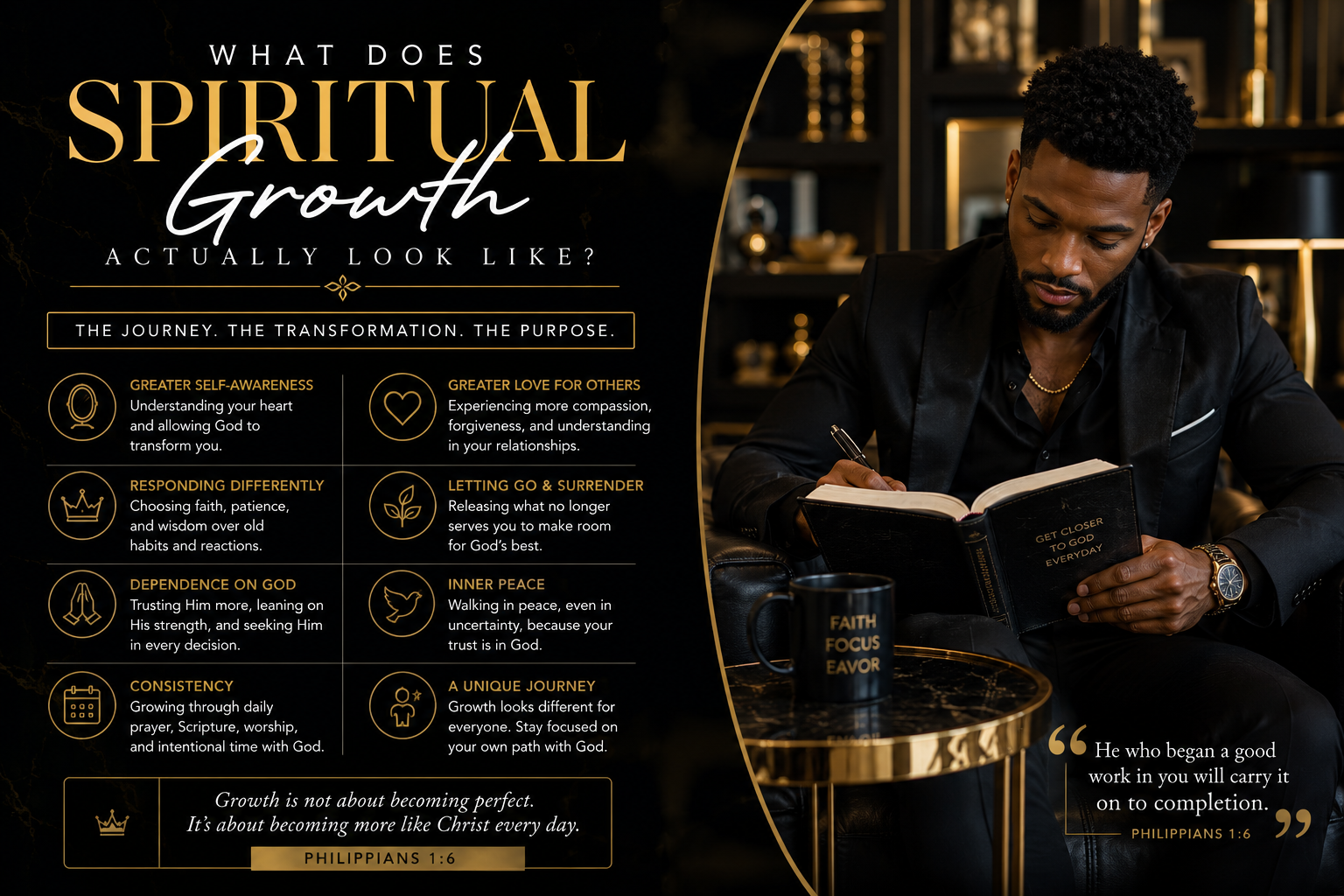
What Does Spiritual Growth Actually Look Like?
Spiritual growth is more than religious routines or emotional moments — it is the ongoing process of becoming stronger, wiser, more peaceful, and more connected to God through everyday life experiences. What Does Spiritual Growth Actually Look Like? explores the real journey of faith development, helping readers understand how God transforms the heart through healing, consistency, surrender, prayer, and spiritual maturity. This encouraging blog reminds readers that growth takes time, and every step closer to God matters.
What Does Spiritual Growth Actually Look Like?
Many people begin their faith journey expecting spiritual growth to happen quickly and perfectly. They assume that once they become closer to God, they will instantly stop struggling, never feel discouraged, and always feel spiritually strong.
But real spiritual growth is often much deeper — and much more personal — than people expect.
Spiritual growth is not about becoming flawless overnight.
It is about becoming transformed little by little through your relationship with God.
Growth is a process.
Sometimes it feels powerful.
Sometimes it feels quiet.
Sometimes it feels uncomfortable.
And sometimes you may not even realize how much you are changing until you look back and see how far God has brought you.
1. Spiritual Growth Looks Like Greater Self-Awareness
One sign of spiritual maturity is becoming more aware of your thoughts, actions, attitudes, and behaviors.
As you grow spiritually, God begins revealing:
Unhealed wounds
Negative thinking patterns
Pride
Fear
Anger
Bitterness
Insecurity
Areas needing healing
This can feel uncomfortable at first, but conviction is often part of growth.
God reveals things not to shame you, but to transform you.
2. Spiritual Growth Looks Like Responding Differently
Growth often shows up in your reactions.
Situations that once caused:
Explosive anger
Anxiety
Revenge
Bitterness
Panic
Emotional breakdowns
May now produce:
Prayer
Patience
Wisdom
Self-control
Discernment
Peace
You may still feel emotions deeply, but you begin handling them differently.
That is growth.
3. Spiritual Growth Looks Like Greater Dependence on God
At the beginning of many faith journeys, people often rely heavily on their own understanding, emotions, or strength.
But spiritual maturity teaches dependence on God.
Instead of immediately reacting impulsively, you begin:
Seeking God first
Praying before decisions
Trusting His timing
Asking for wisdom
Leaning on Scripture
You realize that true peace does not come from controlling everything.
It comes from trusting God more deeply.
4. Spiritual Growth Looks Like Consistency
Many people think growth only happens during emotional spiritual moments.
But some of the deepest growth happens quietly through consistency.
Growth looks like:
Praying even when you feel tired
Reading Scripture regularly
Worshipping during difficult seasons
Choosing faith when life feels uncertain
Continuing to trust God despite delays
Consistency builds spiritual strength over time.
5. Spiritual Growth Looks Like Greater Love for Others
As God changes your heart, your relationships begin changing too.
You may notice:
More compassion
Greater patience
Increased forgiveness
More empathy
A desire for peace instead of constant conflict
Spiritual maturity softens the heart while strengthening the spirit.
6. Spiritual Growth Looks Like Letting Go
Part of spiritual development involves surrender.
Sometimes God asks you to release:
Toxic relationships
Harmful habits
Fear
Bitterness
Pride
Old mindsets
Unhealthy attachments
Letting go is not always easy.
But growth often requires making room for what God is building in your life.
7. Spiritual Growth Looks Like Inner Peace
One powerful sign of spiritual maturity is developing peace even during uncertainty.
This does not mean life suddenly becomes perfect.
It means your trust in God becomes stronger than your fear.
Even during:
Delays
Financial pressure
Grief
Stress
Disappointment
Waiting seasons
You begin learning how to remain spiritually anchored.
8. Spiritual Growth Looks Different for Everyone
One of the biggest mistakes people make is comparing their spiritual journey to others.
Some people grow quickly in certain areas.
Others heal gradually over time.
God works with each person differently.
Your journey may not look exactly like someone else’s — and that is okay.
What matters most is continuing to move closer to God.
Encouragement
Spiritual growth is not about pretending to be perfect.
It is about allowing God to shape your heart, strengthen your faith, heal your wounds, and transform your life day by day.
Some seasons will feel beautiful.
Others may feel stretching and uncomfortable.
But every step matters.
Even when growth feels slow, God is still working within you.
Trust the process.
Trust His timing.
And trust that the person you are becoming through God’s guidance is worth the journey.

How Can I Stay True to My Beliefs in a Secular Workplace?
Navigating a secular workplace while staying true to your faith can feel challenging and emotionally draining at times. How Can I Stay True to My Beliefs in a Secular Workplace? offers practical encouragement and spiritual strategies for maintaining integrity, setting healthy boundaries, and honoring God professionally without compromising your values. This uplifting blog reminds readers that faith, wisdom, and character can shine powerfully even in difficult environments.
How Can I Stay True to My Beliefs in a Secular Workplace?
For many believers, working in a secular environment can feel spiritually challenging at times. You may find yourself surrounded by conversations, values, behaviors, or pressures that conflict with your faith and personal convictions.
Sometimes the struggle is obvious.
Other times, it is subtle and happens little by little through compromise, pressure to fit in, fear of judgment, or emotional exhaustion.
You may wonder:
“How do I stay true to God without creating conflict?”
“How do I maintain my integrity professionally?”
“Can I still honor God in this environment?”
The answer is yes.
You can remain professional, respectful, successful, and spiritually grounded at the same time.
1. Know What You Believe
One of the most important parts of maintaining spiritual integrity is being clear about your beliefs and values.
If you are unsure about your convictions, it becomes easier for outside pressure to influence you.
Spend time strengthening your spiritual foundation through:
Prayer
Scripture
Worship
Biblical teaching
Quiet time with God
The stronger your foundation becomes, the easier it is to remain steady in difficult environments.
2. Do Not Compromise Your Integrity to Fit In
Many workplace environments create pressure to blend in socially, morally, or emotionally.
You may encounter:
Gossip
Dishonesty
Inappropriate conversations
Toxic competition
Pressure to remain silent about convictions
Environments that normalize negativity
It can feel uncomfortable being different.
But protecting your integrity is more important than temporary approval.
You do not have to become disrespectful or argumentative to stand firm in your values.
Often, quiet consistency speaks louder than confrontation.
3. Let Your Character Reflect Your Faith
Sometimes people think representing God only means speaking about faith openly.
But one of the strongest testimonies is character.
Your workplace behavior can reflect your faith through:
Kindness
Patience
Honesty
Excellence
Reliability
Respect
Self-control
Compassion
People notice integrity over time.
Your actions may open doors for conversations that forced arguments never could.
4. Set Healthy Boundaries
Not every conversation, environment, or activity requires your participation.
It is healthy to set boundaries when needed.
Boundaries may include:
Avoiding harmful gossip
Declining activities that violate your convictions
Limiting negative influences
Protecting your peace and mental health
Choosing professionalism over drama
Boundaries are not weakness.
They are wisdom.
5. Stay Spiritually Grounded Outside of Work
One reason many believers struggle spiritually at work is because the workplace becomes their primary emotional environment.
You must continue feeding your spirit outside of work.
Make time consistently for:
Prayer
Church or fellowship
Worship music
Scripture reading
Encouraging friendships
Personal reflection
A spiritually nourished heart handles workplace pressure more effectively.
6. Avoid Becoming Bitter or Judgmental
Working in a secular environment can sometimes cause frustration, disappointment, or spiritual isolation.
But guard your heart carefully.
Do not allow yourself to become:
Bitter
Prideful
Self-righteous
Harsh toward others
Remember that many people are struggling silently and may simply need kindness, encouragement, and grace.
You can stand firm in your beliefs while still treating people with love and respect.
7. Pray for Wisdom Daily
Every workplace situation will not be handled the same way.
Some moments require silence.
Others require courage.
Others require patience and discernment.
Ask God daily for wisdom regarding:
Conversations
Decisions
Relationships
Opportunities
Conflict
Leadership interactions
God can guide you in ways that protect both your integrity and your professional relationships.
8. Remember That God Can Use You Anywhere
Sometimes believers assume God only works through ministry positions or church settings.
But God can use you anywhere:
Offices
Schools
Hospitals
Businesses
Government jobs
Retail environments
Creative industries
Your workplace may be one of the very places where your faith shines brightest through your attitude, consistency, compassion, and integrity.
Encouragement
Remaining true to your beliefs in a secular workplace is not always easy, but it is possible.
You do not have to compromise who you are to succeed professionally.
God can give you:
Wisdom
Strength
Favor
Discernment
Peace
Confidence
As you continue honoring Him through your actions and integrity, trust that He will guide your path and strengthen you daily.

What Should I Do When My Job Doesn’t Align With My Faith?
Feeling spiritually conflicted at work can be emotionally exhausting. What Should I Do When My Job Doesn’t Align With My Faith? explores how to navigate workplace pressure, protect your integrity, and seek God’s wisdom when your career environment challenges your beliefs and values. This encouraging blog offers practical spiritual guidance for maintaining peace, standing firm in your faith, and trusting God for direction, purpose, and new opportunities.
What Should I Do When My Job Doesn’t Align With My Faith?
Many people silently struggle with a difficult question:
“What do I do when my workplace environment conflicts with my beliefs, values, or relationship with God?”
For some, the conflict is obvious.
For others, it is more subtle.
Maybe your workplace constantly pressures you to compromise your integrity.
Maybe the environment feels toxic, ungodly, dishonest, or emotionally draining.
Maybe you feel spiritually disconnected every time you walk into work.
Or maybe you simply feel that God is calling you toward something different, but fear keeps you stuck.
If you have been wrestling with these feelings, you are not alone.
1. First, Pray Before Making Emotional Decisions
When work becomes stressful or spiritually uncomfortable, it is easy to react emotionally.
But before quitting suddenly or making fearful decisions, take time to pray and seek God’s wisdom.
Ask God:
Is this season temporary?
Am I supposed to learn something here?
Are You preparing me for transition?
Is this environment harming my spiritual growth?
What steps should I take next?
God often gives clarity gradually, not instantly.
Prayer allows you to respond with wisdom instead of frustration.
2. Examine What Specifically Conflicts With Your Faith
Not every difficult job is automatically outside of God’s will.
Sometimes the issue is:
Toxic leadership
Burnout
Dishonest practices
Constant negativity
Pressure to compromise morals
Lack of peace
An unhealthy work culture
Other times, God may simply be stirring your heart for a different purpose.
Take time to honestly identify what feels spiritually troubling.
The clearer you are about the issue, the easier it becomes to seek God’s direction.
3. Protect Your Integrity
One of the greatest things you can preserve in any workplace is your integrity.
Never sacrifice your values just to fit in, gain approval, or avoid conflict.
There may be moments where:
Others gossip
Dishonesty becomes normalized
Pressure is placed on you to compromise
Immoral behavior is celebrated
Faith is mocked or minimized
Remain respectful, but stand firm in your convictions.
Your integrity matters more than temporary acceptance.
4. Be a Light Where You Are
Not every uncomfortable workplace means you should immediately leave.
Sometimes God places believers in difficult environments to bring peace, encouragement, wisdom, and kindness to others.
You may be:
The only encouragement someone receives
The calm voice in chaos
The example of honesty and compassion
A reflection of Christ through your actions
People often notice quiet faithfulness more than loud words.
5. Guard Your Spiritual Health
If your workplace constantly drains your peace, weakens your faith, or negatively affects your mental and spiritual well-being, pay attention to those warning signs.
Protect your spiritual life by:
Staying in prayer daily
Reading Scripture consistently
Listening to uplifting teaching or worship
Taking breaks when possible
Setting emotional boundaries
Surrounding yourself with godly encouragement outside of work
Your spiritual health must remain a priority.
6. Ask God for Wisdom About Transition
Sometimes God truly is leading you into a new season.
A new career path.
A business.
A ministry.
A healthier environment.
A fresh opportunity aligned with your purpose and peace.
If you sense God calling you elsewhere, begin preparing wisely.
That may include:
Updating your resume
Learning new skills
Saving money
Seeking mentorship
Exploring new opportunities prayerfully
Faith and wisdom work together.
7. Do Not Let Fear Keep You Trapped
Many people stay in unhealthy environments because they fear uncertainty.
Fear says:
“What if nothing better comes?”
“What if I fail?”
“What if I cannot survive financially?”
But God often opens doors when we trust Him step by step.
That does not mean being reckless.
It means remaining open to God’s direction instead of allowing fear to control your future.
8. Remember That Your Identity Is Bigger Than Your Job
Your career is important, but it is not your entire identity.
Your worth is not based on:
A job title
Income
Status
Approval from coworkers
Corporate success
Your identity comes from God.
When your identity is rooted in Him, workplace pressure loses much of its power over you.
Encouragement
If your job feels spiritually heavy right now, take heart.
God sees your struggle.
He understands your frustration.
And He cares deeply about your peace, purpose, and spiritual well-being.
Whether God calls you to stay, grow, endure, or transition into something new, trust that He can guide you every step of the way.
You do not have to navigate workplace conflict alone.
God is able to provide wisdom, strength, favor, peace, and direction — even in difficult environments.

How Do I Build a Stronger Relationship With God in My Daily Life?
In a world full of distractions, pressure, and uncertainty, many people long for a deeper connection with God but struggle to know where to begin. How Do I Build a Stronger Relationship With God in My Daily Life? offers practical, heartfelt guidance for growing spiritually through prayer, worship, consistency, gratitude, and daily time with God. This encouraging blog will inspire readers to strengthen their faith, find peace in God’s presence, and build a more meaningful relationship with Him one day at a time.
How Do I Build a Stronger Relationship With God in My Daily Life?
Life can become so busy, noisy, and overwhelming that many people begin to feel distant from God without even realizing it. Between work, responsibilities, stress, social media, disappointments, and everyday struggles, it is easy to lose quiet moments with Him. Yet deep inside, many people still desire a closer relationship with God — one that brings peace, direction, strength, comfort, and spiritual confidence.
The beautiful thing is this: building a stronger relationship with God does not begin with perfection. It begins with willingness.
God is not asking you to have all the answers before coming to Him. He simply wants your heart.
1. Start Your Day With God
One of the most powerful ways to grow spiritually is to invite God into your mornings before the distractions of the day begin.
Even if it is only 10–15 minutes, spend time:
Praying
Reading Scripture
Worshipping quietly
Sitting in God’s presence
Thanking Him for another day
Starting your day with God changes your mindset. Instead of beginning your morning with anxiety, pressure, or fear, you begin with peace and spiritual alignment.
2. Talk to God Honestly
Prayer does not have to sound perfect or religious.
God already knows your heart.
Talk to Him honestly about:
Your fears
Your struggles
Your dreams
Your frustrations
Your family
Your healing
Your future
A real relationship with God grows through consistent communication. Just like any healthy relationship, closeness develops through time, honesty, and trust.
3. Read the Bible Daily
The Bible is not just a book — it is spiritual nourishment.
When you read God’s Word daily, your mind becomes renewed and your spirit becomes stronger. Scripture gives wisdom, correction, encouragement, healing, and direction for everyday life.
Start small if needed.
You can begin with:
Psalms for comfort
Proverbs for wisdom
Matthew, Mark, Luke, or John to learn more about Jesus
Even one chapter a day can begin transforming your spiritual life.
4. Remove Spiritual Distractions
Sometimes we ask why we feel distant from God while constantly feeding our minds with negativity, chaos, gossip, fear, and unhealthy influences.
Protect your spiritual environment.
Pay attention to:
What you listen to
What you watch
What influences your thinking
Who constantly drains your peace
The more room you make for God, the more clearly you will hear His voice.
5. Worship Even During Difficult Seasons
It is easy to praise God when life feels good.
But spiritual growth deepens when you continue trusting Him during difficult seasons.
Worship during:
Uncertainty
Delays
Grief
Heartbreak
Financial struggles
Loneliness
Your worship becomes powerful when it is rooted in faith instead of feelings.
6. Stay Consistent — Even When You Don’t Feel Spiritual
Many people think they must “feel” deeply spiritual every day to be close to God. That is not true.
Relationships grow through consistency.
Some days you may feel emotionally strong.
Other days you may feel tired or discouraged.
Continue seeking God anyway.
Small daily habits create strong spiritual foundations over time.
7. Surround Yourself With Godly Encouragement
The people around you influence your spiritual life more than you realize.
Surround yourself with:
Encouraging believers
Positive conversations
Biblical teaching
Faith-filled environments
People who inspire growth instead of negativity
Healthy spiritual community can strengthen your walk with God tremendously.
8. Practice Gratitude
Gratitude changes your spiritual perspective.
Instead of focusing only on what is missing, begin noticing what God has already done.
Thank Him for:
Life
Protection
Growth
Family
Grace
Open doors
Healing
Daily provision
A thankful heart becomes more aware of God’s presence.
God Desires Relationship — Not Perfection
One of the biggest misconceptions people have is believing they must become “perfect” before getting closer to God.
But throughout Scripture, God consistently used imperfect people who were willing to trust Him.
You do not have to know everything.
You do not have to have a flawless past.
You do not have to pretend to have it all together.
God simply wants you to come closer.
Encouragement
Your relationship with God grows one day at a time.
Every prayer matters.
Every moment in His presence matters.
Every step toward Him matters.
Even when growth feels slow, God is still working in your life.
Keep seeking Him.
Keep trusting Him.
Keep growing.
“He draweth near to those who draw near unto Him.” — James 4:8
Personalized Prayer Service: You Don’t Have to Carry It Alone
Receive a personalized prayer for $35 tailored to your needs. Find peace, clarity, and encouragement through intentional, faith-based prayer support.
What Is a Personalized Prayer Service?
Sometimes you don’t need a long process—you just need someone to pray for you.
A personalized prayer service is a focused, intentional prayer created specifically for your situation. Whether you’re facing challenges, seeking clarity, or simply needing peace, your request is lifted up with care and purpose.
This is about meeting you right where you are.
Why Personalized Prayer Matters
There is something powerful about prayer that is tailored to your life.
When your situation is spoken directly in prayer, it can:
Bring comfort during difficult moments
Help you feel supported and seen
Strengthen your faith
Shift your mindset toward peace
It reminds you that you are not alone in what you’re going through.
What You Receive for $35
This service is simple, yet powerful.
For $35, you receive:
A personalized prayer focused on your specific needs
Faith-based encouragement
A message designed to uplift and strengthen you
This is a meaningful way to receive spiritual support without a large commitment.
When to Request a Personalized Prayer
You may want a personalized prayer if you are:
Feeling overwhelmed or stressed
Going through a difficult situation
Seeking clarity or direction
Needing emotional or spiritual support
Wanting someone to stand with you in prayer
Prayer is not just for crisis—it’s for every season.
A Simple Step That Can Bring Peace
Sometimes, the smallest step can create the biggest shift.
Taking a moment to submit your prayer request and receive a personalized response can bring:
Peace to your mind
Strength to your heart
Encouragement to your spirit
It’s a simple act—but a powerful one.
Safe, Supportive, and Faith-Centered
This service is created to provide a safe and respectful space.
There is no pressure—only:
Support
Encouragement
Faith-based care
Your situation is handled with intention and respect.
Final Thoughts: Take the First Step
You don’t have to figure everything out on your own.
If you need prayer, encouragement, or simply someone to stand with you in faith—this service is here for you.
And sometimes, one prayer can make all the difference.
Submit your personalized prayer request today
Receive encouragement and support for your situation
Get your personalized prayer for $35
Disclaimer:
Personalized prayer services are faith-based and intended for spiritual encouragement and support. They do not replace professional, medical, legal, or financial advice.
What Is a Prophetic Prayer Service? Finding Guidance, Clarity, and Spiritual Strength
Discover how prophetic prayer services provide spiritual guidance, clarity, and encouragement through personalized, faith-filled prayer for your life and situation.
What Is a Prophetic Prayer Service?
Understanding Prophetic Prayer
Life can feel overwhelming when you’re searching for answers, direction, or peace.
A prophetic prayer service is a time of focused, intentional prayer where your situation is lifted up before God with clarity, purpose, and spiritual sensitivity.
It’s not about replacing your relationship with God—
it’s about support, encouragement, and alignment through prayer.
Why People Seek Prophetic Prayer
Many people turn to prophetic prayer during moments when they need:
Direction in life decisions
Clarity during confusion
Strength during emotional battles
Peace during stressful seasons
Spiritual encouragement
Sometimes, you just need someone to stand with you in prayer—and that can make all the difference.
What to Expect in a Prophetic Prayer Session
A prophetic prayer session is centered on:
Focused, intentional prayer
Spiritual encouragement rooted in faith
Words of upliftment and guidance
A peaceful, supportive atmosphere
Each session is unique because every person’s situation is different.
The goal is to leave you feeling:
Encouraged
Strengthened
Clearer in your direction
The Power of Personalized Prayer
There is something powerful about prayer that is specific to you.
When your needs are spoken, lifted, and covered intentionally, it helps you:
Feel seen and heard
Gain emotional and spiritual clarity
Strengthen your faith
Move forward with confidence
Personalized prayer brings a deeper level of connection and impact.
When Should You Consider a Prophetic Prayer Service?
You may benefit from a prophetic prayer session if you are:
Feeling stuck or uncertain
Facing personal or emotional challenges
Seeking spiritual clarity
Going through a transition
Wanting deeper connection in your faith
You don’t have to wait until things get worse—
prayer is for every season.
A Space for Peace, Not Pressure
This is not about pressure, fear, or obligation.
It is about creating a safe space where you can:
Release your concerns
Receive encouragement
Be supported in prayer
Everything is done with care, respect, and intention.
Final Thoughts: You Don’t Have to Carry It Alone
Whatever you’re facing—you don’t have to handle it by yourself.
Sometimes, one moment of prayer can shift your mindset, your peace, and your direction.
And having someone stand with you in that moment can make it even more powerful.
Book your prophetic prayer session
Receive encouragement, clarity, and spiritual support
Take the next step in faith today
Disclaimer:
Prophetic prayer services are faith-based and intended for spiritual encouragement and support. They do not replace professional, medical, legal, or financial advice.

Luxurious Wave Front Lace Wig: Effortless Beauty and Confidence
Discover the luxurious wave front lace wig designed for a natural look, soft waves, and all-day comfort—perfect for effortless beauty and confidence.
Beauty That Flows Naturally
There’s something powerful about feeling confident the moment you look in the mirror.
The Luxurious Wave Front Lace Wig is designed to give you that feeling—soft, flowing waves that move naturally and enhance your beauty without effort.
This isn’t just a wig.
It’s a transformation.
What Makes a Lace Front Wig So Special?
A lace front wig creates a natural-looking hairline that blends seamlessly with your skin.
That means:
A realistic appearance
Versatile styling options
A flawless finish every time
With a wave texture, you get volume, movement, and elegance all in one.
Designed for Comfort and Confidence
Looking good should never feel uncomfortable.
This wig is crafted for:
Lightweight wear
Breathability
Secure fit
All-day comfort
So whether you're heading out, working, or attending an event—you can wear it with confidence.
Effortless Style for Any Occasion
One of the best things about a wave front lace wig is its versatility.
You can:
Wear it casually for everyday beauty
Style it for special occasions
Dress it up or down depending on your look
It gives you that “put together” look without the stress.
A Confidence Boost You Can Feel
Hair is more than style—it’s identity, expression, and confidence.
When your hair looks good:
You feel more confident
You carry yourself differently
You show up boldly
This wig helps you step into that version of yourself—effortlessly.
Perfect for Every Woman
Whether you're:
Protecting your natural hair
Trying a new look
Looking for convenience
Enhancing your everyday style
The Luxurious Wave Front Lace Wig is made for you.
Why Quality Matters in Hair Products
Not all wigs are created equal.
High-quality wigs provide:
Better durability
A more natural look
Longer wear
Easier maintenance
Investing in quality means investing in your confidence.
Final Thoughts: Step Into Your Best Look
You deserve to feel beautiful, confident, and effortless every day.
The Luxurious Wave Front Lace Wig helps you do just that—giving you a look that is soft, natural, and empowering.
Because beauty should feel as good as it looks.
Upgrade your look with effortless waves
Experience comfort, style, and confidence
Shop the Luxurious Wave Front Lace Wig today

Why Self-Love Is the Foundation of Confidence and Healing
Discover how self-love builds confidence and healing. Explore our self-love workbook designed to help you grow, heal emotionally, and embrace your true worth.
What Self-Love Really Means
Self-love is often misunderstood.
It’s not pride.
It’s not selfishness.
It’s not ignoring your flaws.
Self-love is choosing to value yourself the way God values you.
It’s learning to:
Speak kindly to yourself
Forgive yourself
Grow without tearing yourself down
Recognize your worth
When you truly understand your value, everything in your life begins to shift.
H2: Why So Many People Struggle with Self-Love
Many people were never taught how to love themselves.
Instead, they grew up with:
Criticism
Rejection
Comparison
Pressure to be perfect
Over time, those experiences shape how you see yourself.
That’s why self-love isn’t automatic—it’s something you have to learn, practice, and build.
How Self-Love Builds Confidence
Confidence doesn’t come from outside validation—it comes from within.
When you begin to love yourself:
You stop seeking approval from others
You set healthier boundaries
You believe in your worth
You walk differently
Self-love creates a confidence that is quiet, strong, and unshakable.
Healing Starts with You
You cannot fully heal while constantly tearing yourself down.
Healing requires:
Grace
Patience
Reflection
Truth
When you choose self-love, you give yourself permission to heal from:
Past pain
Negative thoughts
Emotional wounds
And that’s where real transformation begins.
How a Self-Love Workbook Can Change Your Life
Growth doesn’t happen by thinking—it happens by doing.
A self-love workbook gives you:
Guided reflection
Thought-provoking questions
Space to process emotions
Daily encouragement
It helps you move from:
“I don’t feel enough” → “I know my worth.”
What You’ll Gain from a Self-Love Workbook
Using a self-love workbook consistently can help you:
Build confidence
Improve your mindset
Strengthen your identity
Heal emotionally
Develop daily positive habits
This is not just a workbook—it’s a tool for transformation.
You Deserve to Love Yourself
No matter what you’ve been through…
No matter what you’ve been told…
No matter how you feel right now…
You are worthy of love—including your own.
And when you start loving yourself, everything changes.
Final Thoughts: Choose Yourself Every Day
Self-love is not a one-time decision—it’s a daily choice.
A choice to:
Speak life over yourself
Believe in your worth
Keep growing
Keep healing
And you don’t have to do it alone.
Call to Action
Start your self-love journey today
Explore our Self-Love Workbook
Begin building confidence, healing, and peace

Iviana Gold Cosmetics: Beauty That Starts from Within
Discover Iviana Gold Cosmetics—luxury skincare, hair, and body products designed to nourish, hydrate, and enhance your natural glow with confidence and elegance.
More Than Beauty—A Reflection of Confidence
Beauty is more than what you see on the outside—it’s how you feel, how you carry yourself, and how confidently you walk in who you are.
Iviana Gold Cosmetics was created to enhance your natural beauty while helping you feel radiant, confident, and empowered every day.
Because true beauty begins within—and shines outward.
Skincare That Nourishes and Hydrates
Healthy, glowing skin starts with the right care.
Our skincare products are designed to:
Deeply hydrate and restore moisture
Support healthy, radiant skin
Enhance your natural glow
Provide gentle, effective care
From serums to creams, each product is created to help your skin look and feel its best.
Hair Care That Strengthens and Revives
Your hair is part of your identity—and it deserves care that brings out its beauty.
Iviana Gold hair products are designed to:
Nourish and strengthen hair
Promote softness and shine
Support healthy growth
Restore damaged strands
Whether you’re maintaining your look or restoring your hair, our products help you feel confident and beautiful.
Body Care That Feels as Good as It Looks
Self-care is not a luxury—it’s a necessity.
Our body care products are created to:
Hydrate and soften your skin
Provide a smooth, radiant finish
Leave you feeling refreshed and renewed
From body oils to hydrating formulas, each product is designed to give you that luxury glow.
Beauty with Purpose
At Iviana Gold, beauty is not about changing who you are—it’s about enhancing what already exists.
Every product is created with intention:
To uplift your confidence
To support your self-care routine
To help you feel beautiful in your own skin
Because when you feel good, it shows in everything you do.
Why Choosing the Right Products Matters
Not all beauty products are created equal.
Choosing quality products means:
Better results
Healthier skin and hair
Long-lasting confidence
Iviana Gold Cosmetics focuses on products that work with your body—not against it.
Final Thoughts: Glow with Confidence
Your glow is not just about appearance—it’s about confidence, care, and consistency.
Iviana Gold Cosmetics is here to help you:
Feel confident
Look radiant
Embrace your natural beauty
Because you deserve to shine—every single day.
Call to Action
Explore Iviana Gold Cosmetics
Shop skincare, hair, and body products
Elevate your beauty and confidence today